Is There A Weight Limit On A Mount Cook Glacier Helicopter Flight?
Weight limits on Mount Cook glacier helicopter flights explained per operator, what happens at check-in weighing, and what heavier passengers should do before booking.
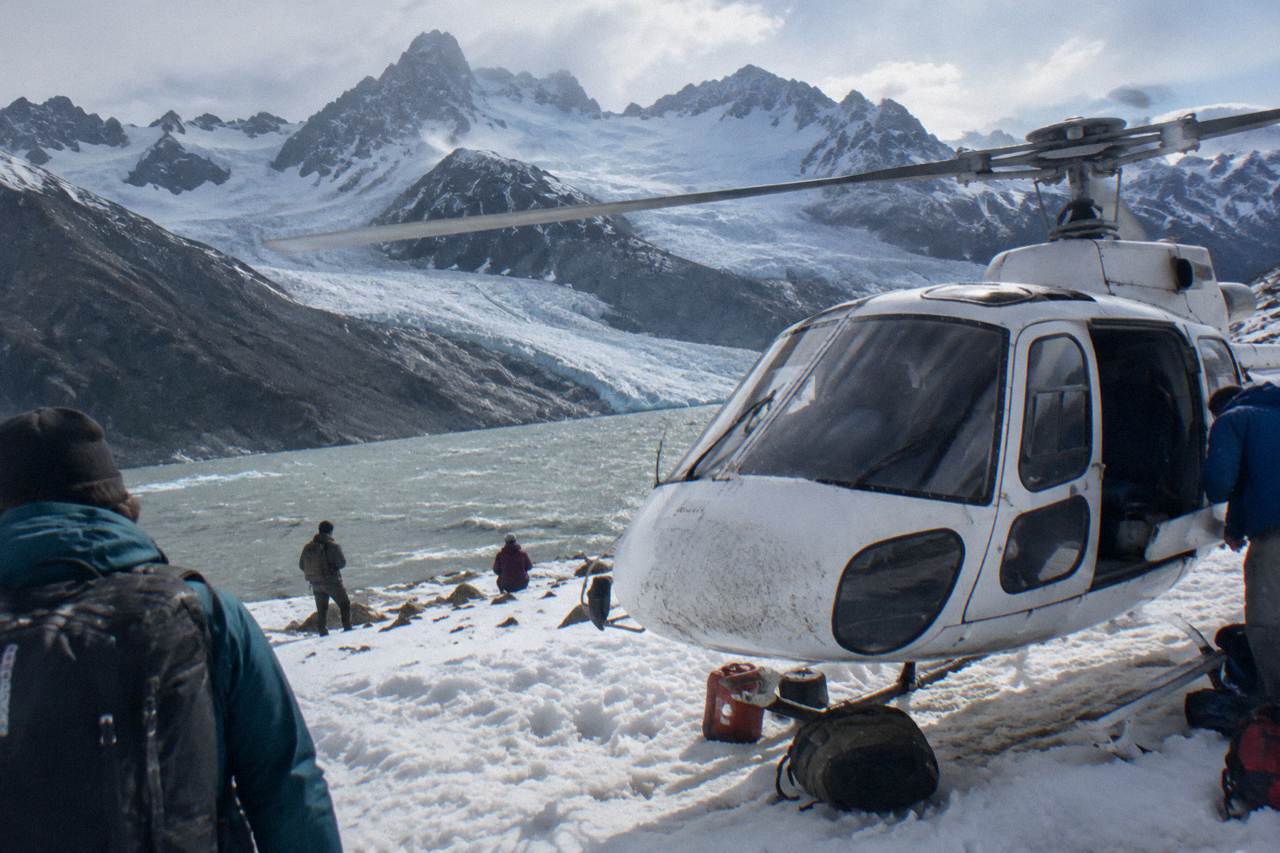
Helicopters flying the Tasman Glacier country are small aircraft flying high, and weight is not a formality on them. It is part of the physics of the day: how much lift the machine can generate at around 2,200 metres, how the load is balanced across the cabin, and whether the pilot can hold a stable approach onto a snow or alpine landing site. That is why the weight question comes up before almost every booking, and why there is no single answer that covers the whole mountain. The flights covered here each carry their own figure, and some carry none in writing at all.
Yes, on most of them. Per-passenger weight figures appear on the large majority of the 34 flights covered here, and they range from 116 kg to 200 kg depending on the operator and the aircraft. There is no universal Mount Cook limit: the number that governs your booking is the one attached to the specific flight you choose, and where a flight shows no figure, the question goes to the operator directly rather than to a default.
The reason the answer varies so much is that it flows from the aircraft, not from the mountain. A six-seat helicopter lifting off for a snow landing has a tighter weight budget than a nine-seat ski plane or a fixed-wing scenic aircraft, and operators publish the per-passenger figure that fits their own machines and their own routes. Mount Cook Ski Planes and Helicopters, for example, says an individual limit of generally 116 kg applies on its flights. Glacier Country Helicopters, flying out of Franz Josef, requires a Comfort Seat from 120 kg on its shared tours and states 200 kg on its two private charters. The Helicopter Line lists figures that range from 125 kg on its short alpine flights to 165 kg on its 55-minute Mount Cook and The Glaciers flight out of Glentanner Park.
None of this is fine print designed to catch anyone out. Mount Cook Ski Planes and Helicopters assigns seats by weight and balance, and it is that same discipline that keeps alpine flying safe. Aoraki / Mount Cook stands 3,724 metres tall and glaciers cover roughly 40 percent of the national park, and the aircraft working that terrain are loaded deliberately, not casually. The practical takeaway for a reader is simple: find the figure for your flight before you pay, and if your weight is near it or above it, tell the operator when booking rather than at the airfield.
If you are still choosing between flights, the three short alpine options below show how differently the limits and prices sit across the same mountain.
Each of those three departs from a different base around Mount Cook, and two of them print a per-passenger weight figure. The Mount Cook Helicopter Flight with Alpine Landing, operated by Glacier Helicopters from Bowen Drive, is a 30-minute flight priced from $221.00 per person, rated 4.9 across 50 reviews, and shows no individual weight figure. The Scenic Helicopter Flight with Alpine Landing, from Mount Cook Airport at 25 minutes and from $196.00, carries the generally 116 kg individual wording from Mount Cook Ski Planes and Helicopters. The Alpine Explorer, a The Helicopter Line product from Glentanner Park, lists 125 kg and runs 35 minutes from $350.73. Reading the three side by side is the fastest way to see why the question "is there a limit" always deserves the follow-up: on which aircraft?
What Weight Limits Do The Mount Cook Flights Actually List?
The flights covered here list per-passenger figures of 116, 120, 125, 150, 165 and 200 kg, each attached to specific operators and aircraft. Mount Cook Ski Planes and Helicopters says generally 116 kg per individual; Glacier Country Helicopters requires a Comfort Seat from 120 kg on shared flights and states 200 kg on its private charters; The Helicopter Line spans 125 to 165 kg depending on the flight.
The table below covers the weight figures stated on the booking pages; for Air Safaris flights, ask Air Safaris. Where a flight shows no figure in its booking information, the cell is left blank rather than filled with a guess, because the honest answer in those cases is a question to the operator. Two flights in the Franz Josef group, the private charters, are priced per group rather than per person, and their 200 kg figure is per passenger, which matters when a family or group of friends is splitting the cost.
| Flight | Operator | Stated per-passenger weight figure |
|---|---|---|
| Scenic Helicopter Flight with Alpine Landing | Mount Cook Ski Planes and Helicopters | 116 kg (generally, per individual) |
| 45-Minute Glacier Highlights Helicopter Tour | Mount Cook Ski Planes and Helicopters | 116 kg |
| 55-Minute Grand Circle Helicopter | Mount Cook Ski Planes and Helicopters | 116 kg |
| Mt Cook: 55-Minute Scenic Flight in Helicopter or Ski Plane | Mount Cook Ski Planes and Helicopters | 116 kg |
| Mt Cook Tour & Ultimate Alpine Experience Combo | Cheeky Kiwi Travel | 116 kg |
| Ultimate Discovery: 3 Glaciers & Snow Landing | Glacier Country Helicopters | Comfort Seat required from 120 kg |
| Mt Cook Supreme: 4 Glaciers with 2 Snow Landings | Glacier Country Helicopters | Comfort Seat required from 120 kg |
| 30 minute Tasman Experience | Inflite Franz & Fox Helicopters | 120 kg |
| Mount Cook Alpine Explorer Helicopter Flight | The Helicopter Line | 125 kg |
| Fox Glacier and Mount Cook Helicopter Flight with Snow Landing | The Helicopter Line | 125 kg |
| Fox Glacier Mountain Scenic Spectacular 40-Min | The Helicopter Line | 125 kg |
| Mountains High 40-Minute Helicopter Flight | The Helicopter Line | 150 kg |
| Mount Cook Spectacular Helicopter Flight from Fox Glacier | Glacier Helicopters | 150 kg |
| Fox Glacier & Mount Cook 35-Minute Helicopter Flight | Glacier Helicopters | 150 kg |
| 3-Hour Heli Hike to the Tasman Glacier | The Helicopter Line | 150 kg |
| Mount Cook and The Glaciers 55-Minute Helicopter Flight | The Helicopter Line | 165 kg |
| Franz Josef: Mountain Scenic Spectacular 40-Min | The Helicopter Line | 165 kg |
| Mount Cook Grand Glacier Experience Helicopter Flight | Glacier Helicopters | 200 kg |
| Private Flight: 3 Glaciers with Snow Landing | Glacier Country Helicopters | 200 kg |
| Private Flight: 4 Glaciers with 2 Snow Landings | Glacier Country Helicopters | 200 kg |
A pattern sits inside those numbers. Each operator sets its own weight allowance, so the figure that matters is the one on the booking page for your specific flight. That is not a judgement about passengers; it is a function of aircraft type, route length and how much fuel and cabin weight each machine can carry at altitude. It also means a reader who is close to a limit on one flight may have a comfortable margin on another flight to the same glaciers, which is worth knowing before concluding that a Mount Cook flight is off the table. Since weather, not just weight, can decide whether a flight goes ahead, the guide to staying overnight at Mount Cook for a glacier flight explains when an extra night gives you backup options a day trip cannot.
One caution belongs here. These figures are per-passenger limits as each operator presents them, not a promise that any given flight can carry a full cabin of passengers at those weights. Total load matters too, and operators balance the whole cabin, not just individuals. The figure answers "can I fly at my weight in principle"; the operator answers "does today's load work".
Still weighing up the short options? The Mount Cook Helicopter Flight with Alpine Landing keeps things simple, and free cancellation up to 24 hours before the start for a full refund is stated on its booking page.
Why Are Passengers Weighed Before A Mount Cook Helicopter Flight?
Passengers are weighed because helicopter performance at altitude depends on total load and its distribution, and pilots need real numbers to calculate both before departure. Mount Cook Ski Planes and Helicopters assigns seats on its flights by weight and balance, and on small alpine aircraft a single unrecorded passenger can change whether a planned landing is achievable.
The physics is unforgiving at height. Air thins as you climb, and a helicopter working at a snow landing site around 2,200 metres on the Tasman Glacier has measurably less lift available than the same machine at the airfield. The pilot computes what the aircraft can do on the day given passengers, fuel and the weather, and honest weights are the input that calculation depends on. Getting them wrong does not just dent the flight plan; it can end a landing altogether, since the pilot may decide the machine cannot hold the site safely with the load aboard.
This is why the weighing is routine rather than rude. The Helicopter Line weighs passengers at check-in, and Mount Cook Ski Planes and Helicopters says passengers may be weighed at check-in too, with seats then assigned by weight and balance rather than chosen. Nobody is singled out; every body on the manifest is a number in the same sum.
It also explains a piece of advice that recurs across operator guidance: heavier passengers should tell the operator when booking. Flagging a weight lets the operator plan the cabin around it, seat you where your weight helps rather than hurts the balance, and avoid the worst outcome, which is a refusal at the airfield with a full aircraft and no room to rearrange. The Mount Cook Glacier Flight pages group flights by category, and weight figures sit alongside price and duration on each, which makes the pre-booking check a two-minute job rather than an email chain.
For readers deciding between a walk and a flight, the Tasman Glacier view walk versus a glacier flight comparison covers the ground option, which carries no weight limit at all but no landing either.
What Happens If You Are Over The Stated Limit?
If a passenger at check-in weighs 15 kg or more above the weight declared at booking, The Helicopter Line may need to reschedule that flight, subject to availability. What operators do not do is quietly carry an over-limit passenger, because the calculation protects everyone aboard.
The most common fix is practical rather than drastic. Because seats are assigned by weight and balance, shifting where a passenger sits can solve a marginal case on a partly full flight. On a full flight it cannot, and the conversation moves to alternatives. The two Glacier Country Helicopters private charters list 200 kg per passenger, and the whole cabin's capacity is yours to distribute, with prices from $1,494.27 per person for the 45-minute three-glacier flight. That is a real jump in cost, but it is the honest alternative when a shared cabin cannot carry the load. The full index of guides sits on Mount Cook Glacier Flight.
The other fix is choosing a different flight in the first place, which is cheaper than it sounds. Glacier Helicopters shows the more generous figures, with 150 kg on its Fox Glacier flights to Mount Cook and 200 kg on its 50-minute Grand Glacier Experience from the Mount Cook base. A traveller whose weight sits above 125 kg, the tightest The Helicopter Line figure on the short Mount Cook flights, may still be well inside Glacier Helicopters' numbers on a flight that sees the same mountain from the Fox side. The Fox Glacier helicopter flights guide lays out those options and where each departs.
Communication is the lever that controls all of this. An operator told about a weight at booking can steer the booking; an operator told at check-in can often only apologise. How weighing is handled differs between operators, so if you are unsure what happens on the day, ask the operator when you book. The figures above are the operators' own, published so that the conversation can happen early.
Does A Weight Limit Change Which Seat You Get On A Mount Cook Flight?
Yes, in most cases seat assignment on these flights is an operational decision made by weight and balance, not a choice made at booking. Mount Cook Ski Planes and Helicopters states plainly that seats are assigned by weight and balance and not chosen, and other operators work the same way even where they say less about it.
This surprises passengers who have flown scenic routes elsewhere and picked a window seat at booking. On a six-seat helicopter over the Tasman, where each passenger sits genuinely changes how the aircraft handles, and the pilot's calculation places bodies to keep the centre of gravity inside safe limits. If a specific seat matters to you, the honest position is that it may not be yours to choose.
The silver lining is that on most of these aircraft the window question barely exists. Air Safaris, which flies fixed-wing aircraft out of Lake Tekapo on its 50-minute Mount Cook and Beyond flight, says every seat is a window seat on its machines. Helicopters are more open-sided still: with three or four passengers aside the pilot, the view is shared across the cabin rather than rationed to one side. The how many people fly in a Mount Cook glacier helicopter piece covers cabin sizes across the flights: Pilatus Porter ski planes seat nine, and standard helicopters seat five to seven depending on weight.
What seat assignment is not, is a comment on any passenger. A heavier traveller placed by the door, or a light traveller placed mid-cabin, is geometry, not judgement. Operators repeat this in their briefing language because they know the scale moment can feel pointed, and pilots brief the whole cabin the same way: weights recorded, seats set, door closed, headphones on.
Do Children And Infants Count Toward The Weight On A Glacier Flight?
Children count toward aircraft weight in full, and infants are treated more strictly than many families expect: Mount Cook Ski Planes and Helicopters states that infants on a lap still occupy a charged seat under Civil Aviation Authority rules. There is no weight discount for being small, because the aircraft's total load calculation does not distinguish passengers by age.
The infant rule is the detail that catches families out. On regular airliners a lap infant is often unbilled and unweighted; on a small alpine helicopter every person aboard is part of the certified load, and the operator's wording is explicit that a lap infant occupies a charged seat. Families booking the short alpine flights around Mount Cook should budget accordingly and mention every traveller, however small, at the time of booking.
Minimum ages are a separate question from weights, and almost none of the flights state one. Across the 34 flights covered here, only the 3-Hour Heli Hike to the Tasman Glacier states a minimum age, and it is 10 years, which makes sense given that trip includes up to two hours walking on the glacier rather than a flight alone. For the pure scenic and landing flights, Mount Cook Ski Planes and Helicopters says all ages are welcome with ear protection and lap belts, and other operators will answer the age question when asked.
Practical packing for children follows the same logic as for adults, only more so. Operators advise warm layers, sturdy closed-toe shoes and sunglasses because snow glare is strong, and landing sites typically run a few degrees cooler than the airfield. Drones are banned in the national park, and operators ask that selfie sticks stay behind. Small children who cannot keep headphones on will hear less of the pilot's commentary, which is a comfort consideration rather than a rule, but worth weighing when choosing between a 25-minute flight and a 55-minute one.
What Should Heavier Passengers Do Before Booking A Mount Cook Flight?
Three things, in order: find the per-passenger figure for the specific flight, tell the operator your weight when booking rather than at check-in, and if the figure is tight, look at the flights carrying the more generous 150, 165 or 200 kg numbers before giving up on the mountain.
The first step takes minutes. Each flight's figure, where one exists, sits in its booking information, and the table above gathers them in one place. If your flight shows no figure, ask the operator directly rather than assuming either the best or the worst; several flights on the mountain, including the Mount Cook Helicopter Flight with Alpine Landing from Bowen Drive, show no per-passenger number at all, and the operator will answer the question in a single exchange before you commit.
The second step is the one operators themselves push. Air Safaris says heavier passengers should tell the operator when booking, Mount Cook Ski Planes and Helicopters states 116 kg and may weigh passengers, and The Helicopter Line weighs every passenger at check-in as standard practice. Booking with the information on the table lets the operator plan the cabin, and all 34 flights here carry free cancellation, so an early honest conversation costs nothing if the answer turns out to be no. Check the booking page for each flight's refund cutoff.
The third step is where the market helps. The flights with the roomiest figures include The Helicopter Line's 55-minute Mount Cook and The Glaciers flight at 165 kg, Glacier Helicopters' Grand Glacier Experience at 200 kg, and the two Glacier Country private charters at 200 kg per passenger. The Mount Cook helicopter flight price comparison guide shows what each of those costs against the shorter flights, so the weight question and the budget question can be answered together.
There is also a timing dimension that has nothing to do with bodies and everything to do with patience. Weather decides these flights, and the decision can come anywhere from early morning to about ten minutes before departure, so operators advise booking the first day of a stay to leave room to rebook. NIWA's seasonal outlook for November 2026 to January 2027 favours above-normal rainfall in the Southern Alps, which is a reason to hold a couple of spare days rather than a reason not to go. A weight conversation plus a weather buffer is the difference between a stressful booking and a plan.
The alpine landing category is where most weight-sensitive readers land, because the flights are short, cheap and stunning. Here are the three again for a final look.
Common Questions About Mount Cook Flight Weight Limits
Is There A Weight Limit On A Mount Cook Glacier Helicopter Flight?
On most flights, yes. Per-passenger figures on the flights covered here range from 116 kg to 200 kg, set by each operator for its own aircraft. There is no single Mount Cook-wide number, so check the figure for the specific flight, and where none is shown, ask the operator before booking.
Do You Get Weighed At Check-In For A Mount Cook Helicopter Flight?
On many flights, yes. The Helicopter Line weighs passengers at check-in, and Mount Cook Ski Planes and Helicopters says passengers may be weighed and that seats are then assigned by weight and balance rather than chosen.
What Is The Highest Weight Limit On The Flights To The Mount Cook Glaciers?
200 kg per passenger, listed on Glacier Country Helicopters' two private charters out of Franz Josef and on Glacier Helicopters' 50-minute Grand Glacier Experience. Note the two private charters are priced per group, from $1,494.27 and $1,982.78 respectively.
Can You Fly If You Are Over The Stated Limit?
Not on that flight, generally, but the limit belongs to the aircraft rather than the destination. Flights with higher per-passenger figures, including several West Coast departures to Aoraki / Mount Cook, may suit better, and telling the operator your weight at booking lets them place you where the cabin balance works.
Do Babies Count Toward The Weight On A Glacier Helicopter Flight?
Every person aboard counts toward the aircraft's load. Mount Cook Ski Planes and Helicopters states that infants on a lap still occupy a charged seat under Civil Aviation Authority rules, so families should include infants when booking.
Does A Weight Limit Apply On Ski Plane And Fixed-Wing Flights Too?
Each flight carries its own figure where one is stated, regardless of aircraft type, and the fixed-wing and ski plane options list their own numbers or none. Check the specific flight's information rather than assuming a lighter aircraft means a looser limit.