How Do You See The Glaciers At Mount Cook On A Scenic Flight?
The four ways to see the glaciers at Aoraki / Mount Cook from the air, with prices, durations, departure bases and landing types compared.
You can see the glaciers at Mount Cook from the air four ways: a fixed-wing or helicopter flight with no landing, a snow landing on an alpine site, a glacier landing on the Tasman Glacier itself, or a heli hike that puts you on the ice for up to two hours. Prices run from $196 per person for a 25-minute flight to $695.41 for a 12-hour Queenstown day trip.
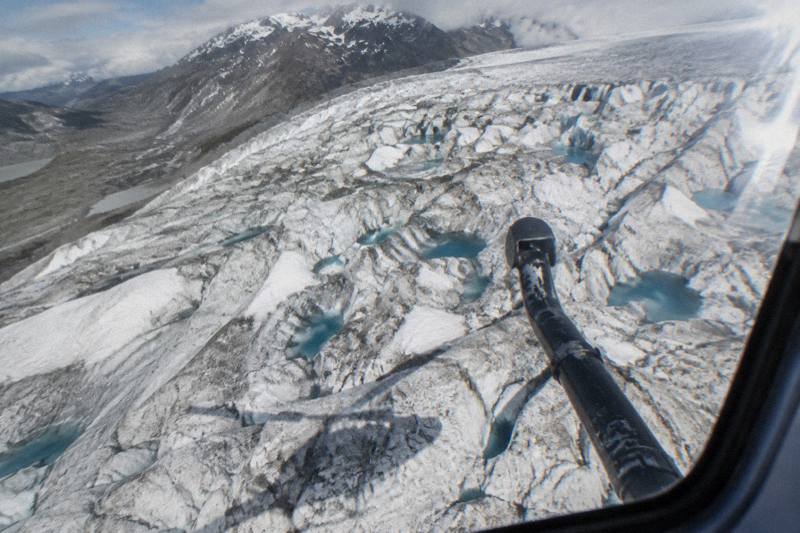
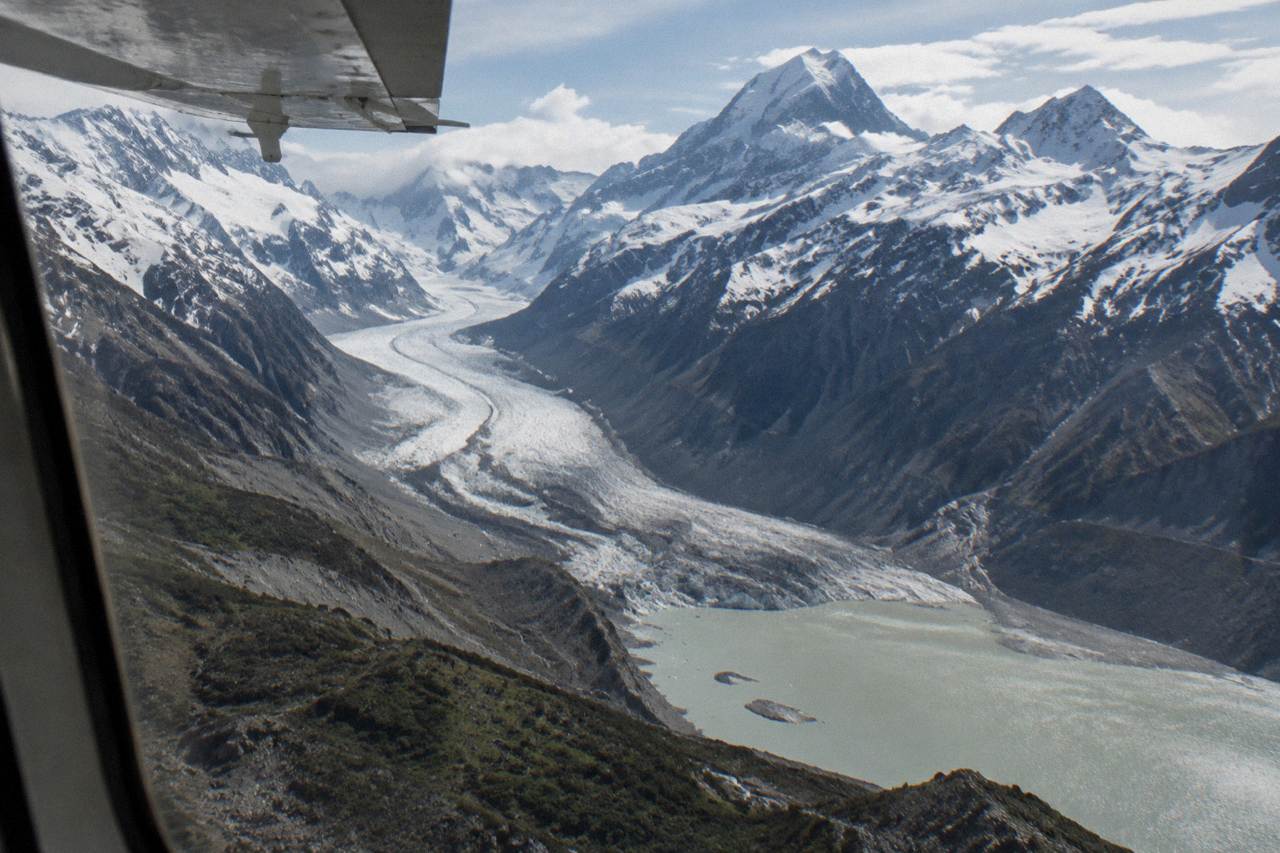
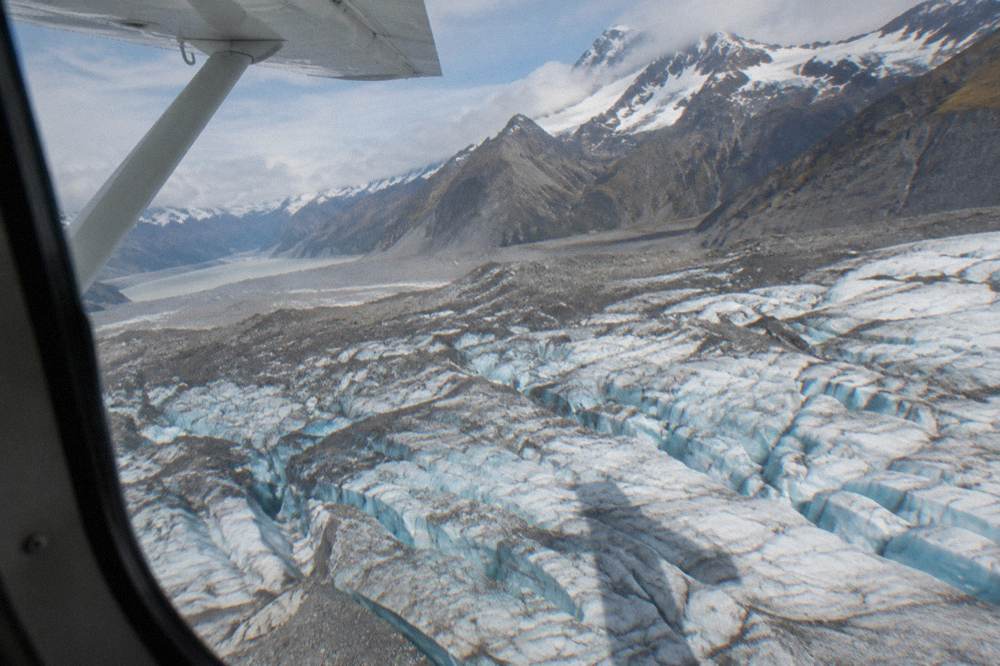
The geography explains why flying works so well here. Aoraki / Mount Cook stands 3,724 metres tall, the country's highest peak, and the national park around it holds 19 peaks over 3,000 metres with glaciers covering roughly 40 percent of its area. Five major valley systems, the Godley, Murchison, Tasman, Hooker and Mueller, thread through the range, and most of them are invisible from the road. The Tasman Glacier alone, New Zealand's largest and longest at about 23 kilometres, is visible from the main highway at the park entrance, but only from above do you see it whole: up to 3 kilometres wide, with ice about 600 metres deep near the Hochstetter Icefall.
That is the case for the flight in one sentence. On the ground you can walk to a glacier terminus or a viewpoint, and the Hooker Valley Track is a superb 10 kilometre return walk, but a scenic flight puts the entire icefield between you and the horizon in under an hour. Landing flights on the Tasman reach about 2,200 metres, a height from which the glacier reads as a landscape rather than a wall of ice.
Which flight you pick determines what kind of experience you get, and the differences are bigger than most first-time visitors expect. A flyover is pure sightseeing. A snow landing puts you briefly on an alpine snowfield. A glacier landing touches down on the Tasman Glacier itself. A heli hike combines a 15-minute flight each way with up to two hours walking on the ice with a guide. The sections below take each in turn, then cover the practical questions: where flights leave from, who gets a window seat, and what happens when the weather turns.
Between Mount Cook Airport and Glentanner Park, three flights cover the most ice in a single outing. The 55-minute Mount Cook and The Glaciers Helicopter Flight from The Helicopter Line overflies the Tasman, Fox and Franz Josef glaciers and Aoraki itself, rated 4.7 across 142 reviews, from $545.25 per person. The two Mount Cook Ski Planes and Helicopters options, the 45-minute Glacier Highlights Helicopter Tour from $401.73 and the 55-minute Grand Circle Helicopter from $459.20, both land on a glacier with 10-15 minutes on the snow, the latter crossing the Main Divide to the Fox and Franz Josef glaciers.
Which Glaciers Can You Actually See From A Mount Cook Flight?
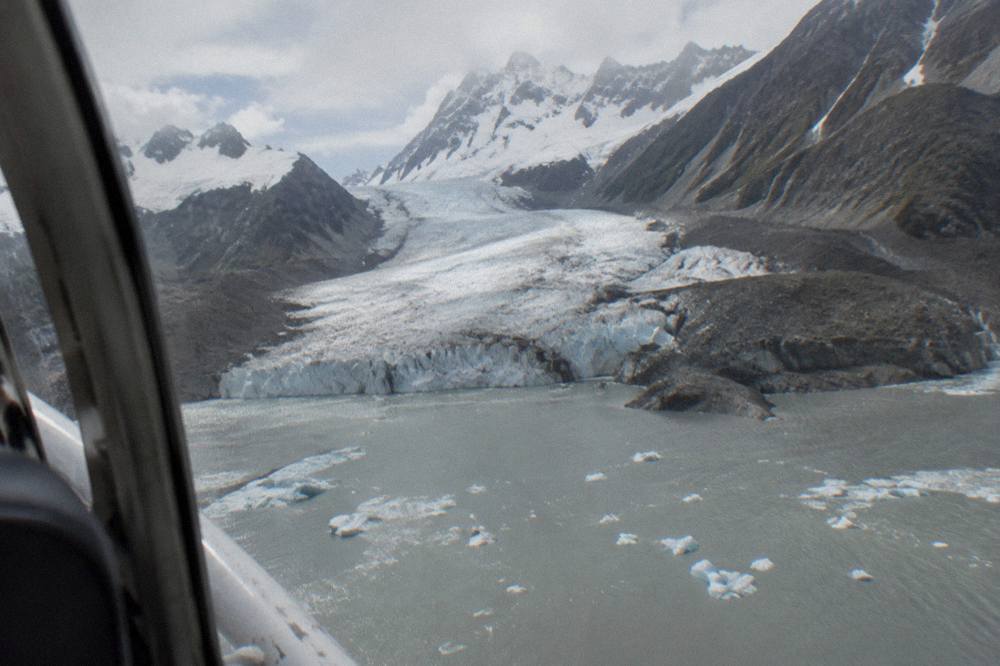
From Mount Cook Airport and Glentanner Park, flights name the Tasman Glacier, Aoraki / Mount Cook, and on the longer routes the Fox and Franz Josef glaciers across the Main Divide. The Tasman Glacier appears on nearly every route; the Fox and Franz Josef appear together on the Grand Circle flights, which cross the divide to the West Coast icefields before turning back over the Hochstetter Icefall and Aoraki's east face.
The short flights stay east of the divide. The 25-minute Scenic Helicopter Flight with Alpine Landing from Mount Cook Ski Planes and Helicopters, the most reviewed flight here at 536 reviews rated 4.8, passes by the Tasman on its way to an alpine landing, from $196 per person. The mid-length flights, 40 to 55 minutes, generally add the Hochstetter Icefall, the Tasman Terminal Lake, the Grand Plateau and Plateau Hut, with Aoraki's east face on the flight line. The Grand Circle routes then push over the divide: the crossing is the whole point of these flights, and the two glaciers you see on the far side, the Fox at about 13 kilometres and the Franz Josef at about 12, are the West Coast's famous pair seen from the alpine side most visitors never get.
Landing flights on the Tasman reach about 2,200 metres, high enough that the scale of the icefield becomes legible: the Murchison Glacier, about 18 kilometres long, flowing beside the Tasman, and the Mueller, about 13 kilometres. Captain J. L. Stokes gave the mountain its English name in 1851; Aoraki is its older name, and both appear on the flight routes and listings. For a fuller comparison of which icefield you see from which departure point, the Tasman versus Fox versus Franz Josef glacier flight comparison breaks down the routes side by side.
One honest caveat belongs here: no flight can promise a view. A named glacier on a route is the plan, not a guarantee, and weather over the Southern Alps changes fast. Book the first day of a stay, as the operators themselves advise, so a weather shift costs you a morning rather than the whole trip.
The 55-minute flight over Mount Cook's glaciers is the natural pick if seeing the most ice in one outing is the goal, since it is one of the routes that name the Tasman, Fox, Franz Josef and Aoraki together. Cancellation is flexible: a full refund up to 24 hours before the start, and if The Helicopter Line cancels for weather you get the choice of another date or a full refund under its own terms. Check availability for your dates on the booking page before you lock in the rest of your plans.
What Is The Difference Between A Flyover, A Snow Landing And A Glacier Landing?
A flyover stays in the air the whole time, a snow landing sets down on an alpine snowfield where no glacier is named, and a glacier landing sets down on the Tasman Glacier itself. A heli hike adds up to two hours of guided walking on the glacier. Of the flights covered here, 16 include a glacier landing, 9 a snow landing, 4 an alpine landing and 3 no landing, with weather and pilot calls deciding on the day.
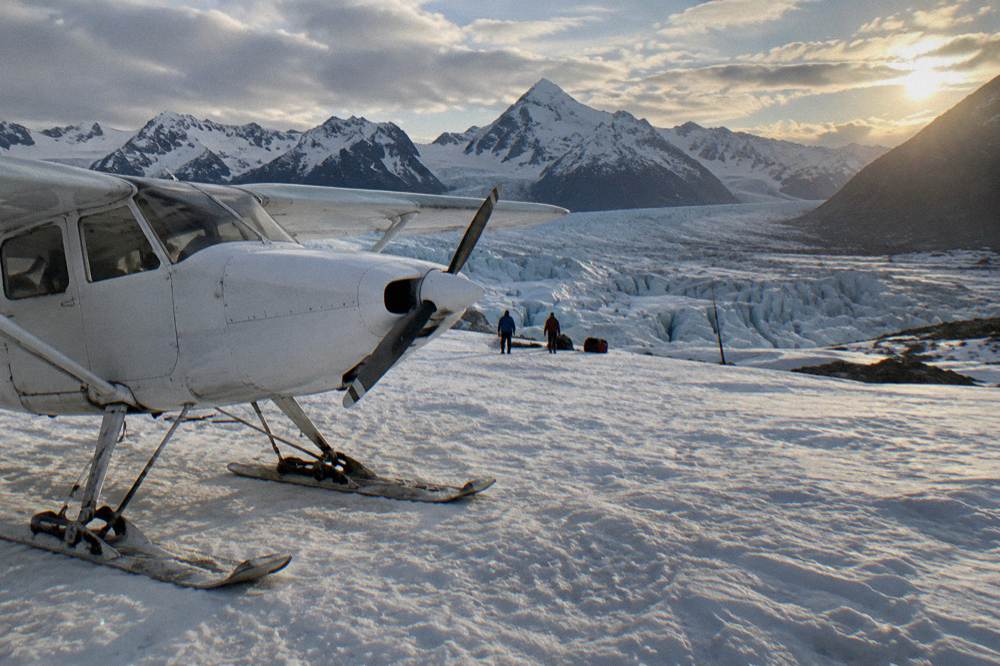
The vocabulary matters because the prices differ and the experiences are not interchangeable. An alpine landing touches down on a mountain site, not a glacier: the Scenic Helicopter Flight with Alpine Landing from Mount Cook Ski Planes and Helicopters, from $196, is the cheapest per-person flight of the 34, and its landing is an alpine one. A snow landing sets down on snow, 5 to 15 minutes on some flights, with the glacier not named in the landing description. A glacier landing is the one that puts boots on ice, and the cheapest listing with a named glacier landing is the Mount Cook: Ski Plane and Helicopter Glacier Combo Flight from Mount Cook Ski Planes and Helicopters, from $280 per person, rated 4.7 across 380 reviews, a 45-minute flight that pairs a ski plane leg with a helicopter leg.
| Way to see the glaciers | What it is | Example flight | From (per person) | Duration |
|---|---|---|---|---|
| Flyover | Fixed-wing or helicopter, no landing | Lake Tekapo: 50-Minute Mount Cook and Beyond Scenic Flight | $317.00 | 50-minute flight, 60 minutes total |
| Alpine landing | Lands on a mountain site, not a glacier | Scenic Helicopter Flight with Alpine Landing | $196.00 | 25 minutes |
| Snow landing | Lands on snow, glacier not named | Fox Glacier and Mount Cook Helicopter Flight with Snow Landing | $291.78 | 35 minutes, 10 on snow |
| Glacier landing | Lands on the Tasman Glacier | Ski Plane and Helicopter Glacier Combo Flight | $280.00 | 45 minutes |
| Heli hike | Glacier landing plus guided ice walk | 3-Hour Heli Hike to the Tasman Glacier | $558.00 | 3 hours |
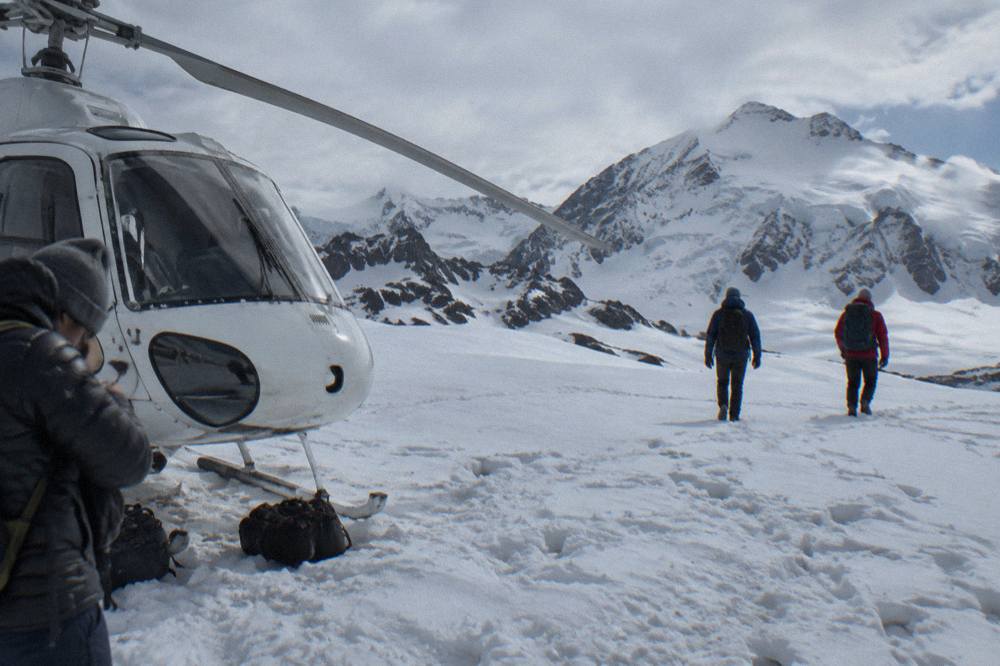
The heli hikes are their own category. Both the 3-Hour Tasman Glacier Helicopter Ride and Hike from Mt Cook Glacier Guiding, rated 4.9 across 347 reviews, and the 3-Hour Heli Hike to the Tasman Glacier from The Helicopter Line, rated 4.8 across 270 reviews, cost from $558 per person and run to three hours, with the Mt Cook Glacier Guiding hike spending 15 minutes flying each way and up to two hours on the glacier with a guide. The Helicopter Line's version has a minimum age of 10 and states pickup in Mount Cook Village. The Helicopter Line's own terms on its heli hike: the flight is subject to favourable weather and minimum passenger numbers, and if cancelled you get an alternative date or a full refund. If the distinction between landing types still feels fuzzy, the plain-language breakdown in whether an alpine landing is the same as a glacier landing settles it.
Snow minutes are listed per flight, not per category, so check the specific flight. Mount Cook Ski Planes and Helicopters' landing flights carry 10-15 minutes on snow; The Helicopter Line's Mountains High 40-minute flight lists 5-10; the Alpine Explorer lists 10. Where a flight states none, no figure exists to print, and any estimate would be invented. The same caution applies to landings themselves: Glacier Helicopters says in its own FAQ that it tries for a landing and tells guests at check-in if one may not happen.
Where Do Mount Cook Scenic Flights Depart From?
Most Mount Cook flights leave from one of two bases on State Highway 80: Mount Cook Airport, just before the village, where Mount Cook Ski Planes and Helicopters is based, and Glentanner Park, about 15 minutes before the village by operator wording, where The Helicopter Line is based. Between them, the two bases account for 14 of the 17 flights in the Aoraki / Mount Cook departure area, with the balance at Glacier Helicopters' Bowen Drive base.
The two main bases are routinely confused, and booking the wrong one can cost you the drive. Mount Cook Airport sits on SH80 just short of the village. Glentanner Park is a separate base up the road, and The Helicopter Line says complimentary transport can be provided from the village. Mount Cook Ski Planes and Helicopters' FAQ says transfers are not included, though its home page also lists complimentary village transfers: the honest answer is that a transfer may be available, so ask the operator when booking. Arrive by the check-in time in the booking email rather than guessing a buffer. Other pages covering the same trip are gathered on Mount Cook Glacier Flight.
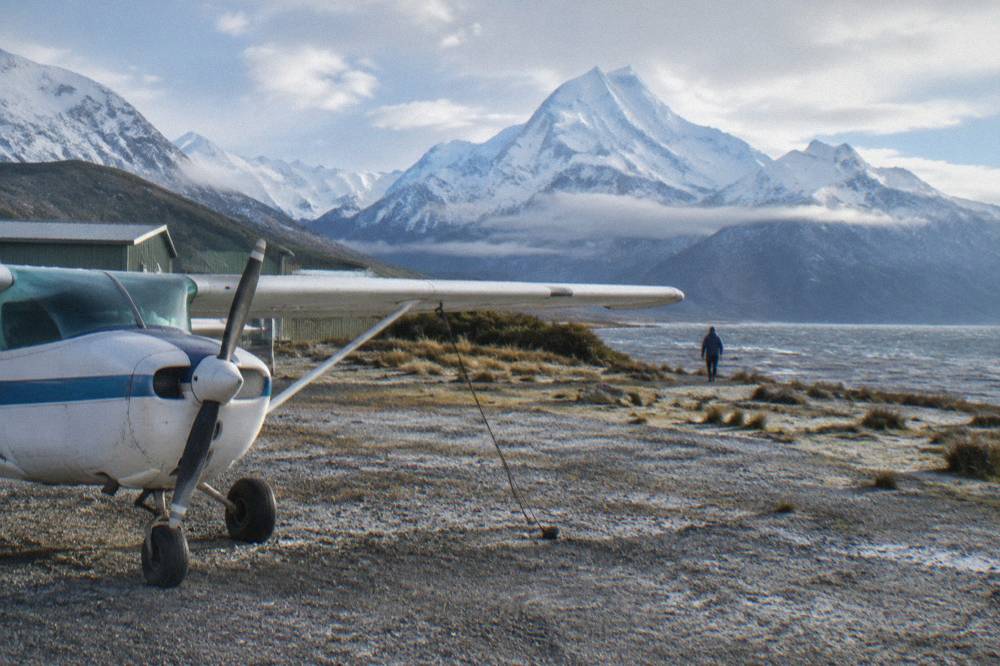
The village itself is about 3.5 hours' drive from Queenstown and about 4.5 from Christchurch, per the Department of Conservation, with the nearest supermarkets an hour away in Twizel or an hour and a half in Tekapo. That distance is exactly why the Queenstown and Tekapo departure category exists: five flights, from the Lake Tekapo fixed-wing scenic flight at $317 through two 12-hour Cheeky Kiwi coach-and-fly day trips at $504.60 and $695.41. The Tekapo option, Air Safaris' 50-minute flight rated 4.9 across 139 reviews, departs Lake Tekapo Airport with no landing, overflying Aoraki and the glaciers beyond. Check NZTA Journeys for road conditions before any of these drives; the state of SH80 is a same-day question.
The full picture of every departure point, including the West Coast bases at Fox Glacier and Franz Josef, is mapped out in the guide to Mount Cook helicopter departure points.
Do You Get A Window Seat On A Mount Cook Scenic Flight?
On the Air Safaris fixed-wing flights every seat is a window seat, with aircraft carrying 7 to 13 passengers. On the helicopters, seats are assigned by weight and balance rather than chosen, so a specific seat cannot be promised: Mount Cook Ski Planes and Helicopters states this openly, and The Helicopter Line weighs passengers at check-in.
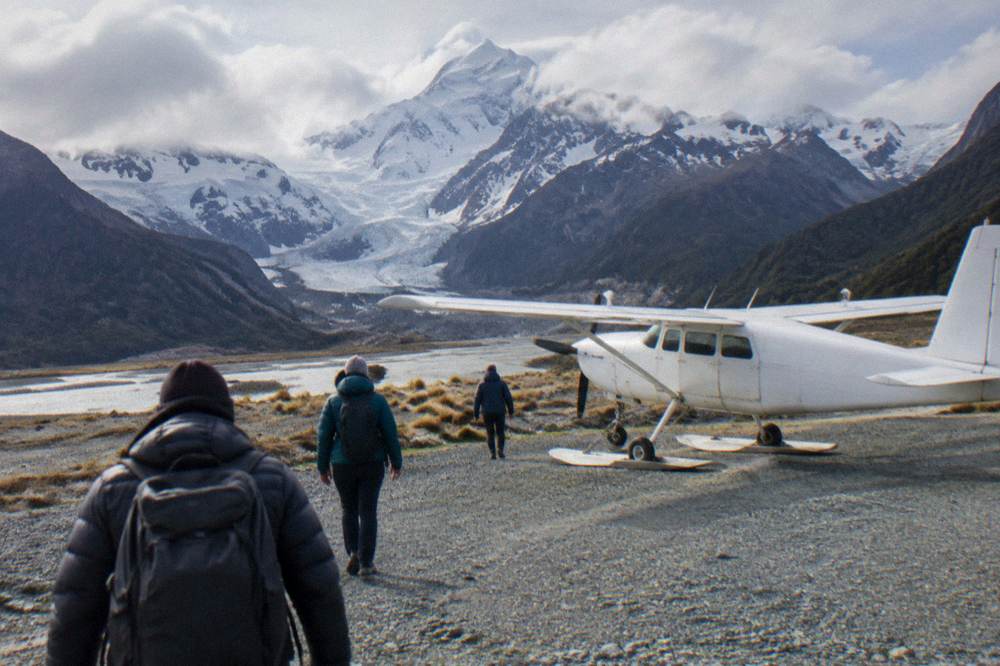
This is the practical detail that surprises people. On a scenic helicopter flight the pilot is balancing the machine, and where you sit is a consequence of that arithmetic, not a preference you exercise at booking. Mount Cook Ski Planes and Helicopters says generally 116 kg as a per-individual limit; weight limits elsewhere vary by operator as each flight's own terms show, and heavier passengers should tell the operator when booking so seating can be planned. Infants on a lap still occupy a charged seat under Civil Aviation Authority rules, per Mount Cook Ski Planes.
The fixed-wing experience is different in kind. Air Safaris, the operator of the Tekapo flight, carries 7 to 13 passengers with every seat at a window, which removes the seat lottery, and makes no landing. For readers weighing the two formats against each other, the comparison of helicopter, ski plane and fixed-wing flights at Mount Cook works through the trade-offs in detail. The ski plane is the third format: the Pilatus Porter aircraft seat nine, and the Grand Circle Ski Plane flight, rated 5.0 across 16 reviews from $459.20, runs 55 minutes over the same Grand Circle route.
Practical notes that apply at every base: dress in warm layers, bring sunglasses because snow glare is strong, wear sturdy closed-toe shoes, and leave drones and selfie sticks behind, they are prohibited on Mount Cook Ski Planes and Helicopters' flights and recreational drones are banned throughout the national park. Landing sites run typically 1 to 3 degrees cooler than the airport, a difference that matters more than it sounds when you are standing on snow in mountain wind. For what that actually feels like, how cold it is on a Mount Cook glacier landing covers the layering question properly.
How Much Does A Scenic Flight Over The Mount Cook Glaciers Cost?
Per-person prices across the 32 flights priced individually run from $196.00 to $695.41, with a median of $409.68. The $196 floor is an alpine landing flight, not a glacier landing; the cheapest listing with a named glacier landing is $280.00, and the two private charters from Franz Josef, priced per group at $1,494.27 and $1,982.78, sit outside the per-person range entirely.
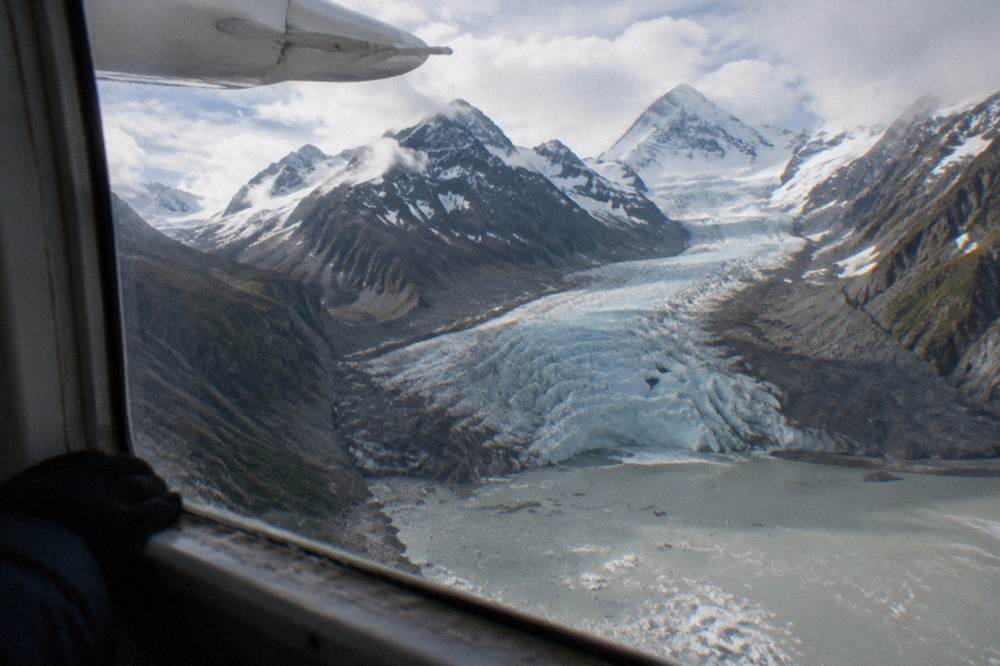
Category by category, the bands are narrow enough to plan against. Short alpine landing flights, three of them, run $196.00 to $350.73. Tasman Glacier landings, eight, run $280.00 to $558.00, the top figure being the heli hikes. Multi-glacier and Grand Circle flights, six, run $392.00 to $545.25. Fox Glacier flights to Mount Cook, five, run $271.15 to $409.68. Franz Josef flights to Mount Cook, seven, run $246.55 to $514.37. The Queenstown and Tekapo departures run $317.00 to $695.41, but those are day trips where the flight is one component of a coach or exploration itinerary.
What moves the price is three things: minutes in the air, the number of glaciers on the route, and whether you land. The 55-minute Grand Circle flights at $459.20 cost about $60 more than the 45-minute Glacier Highlights at $401.73 with the same operator, and the difference buys the Main Divide crossing to the Fox and Franz Josef. Against that, the $280 combo flight undercuts both with its ski plane and helicopter pairing. Reviews do not track price neatly: the most reviewed flight here, 536 reviews at 4.8, is also the cheapest, while the highest rated with 50 or more reviews, Glenorchy Air's Queenstown day trip at 5.0 across 61 reviews, costs $505.18 for an experience measured in hours rather than minutes.
All 34 booking pages state free cancellation up to 24 hours before the start for a full refund. That is a booking rule, not a weather policy: what happens when weather cancels a flight is each operator's own terms, covered below, and the two things should never be conflated.
What If The Weather Cancels Your Mount Cook Flight?
Weather cancellation terms belong to each operator, and they differ. The Helicopter Line offers a new date or a full refund; Mount Cook Ski Planes and Helicopters' 55-minute scenic flight is 100 percent refundable for weather cancellations; its 25-minute alpine landing flight offers a new tour within 30 minutes or a full refund; and Southern Lakes says simply that all flights are weather dependent. The 24-hour free cancellation window is separate and applies to all 34 listings. For a closer look at how the routes, prices and landing options compare, the detailed guide to The Helicopter Line's Mount Cook flights breaks down every variation alongside the weather terms.
This is the part of the planning that deserves real attention, because alpine weather does not negotiate. NIWA's end-of-summer snowline survey, flown annually since 1977, described recent retained snow on some glaciers as "only a stay of execution and not a reversal in the long-term decline of ice coverage", and NIWA's seasonal outlook for November 2026 to January 2027 favours above-normal rainfall in the Southern Alps. None of that says a given day will fail, but it says the margin for a same-day booking is thin. Mount Cook Ski Planes notes the weather decision can come any time from early morning to about 10 minutes before departure, which is why booking the first day of a stay, and holding a spare morning, is the single best piece of scheduling advice for this trip.
Timing helps in other ways. The Helicopter Line makes its final weather call about an hour before departure. Mount Cook Ski Planes says snow landings are possible at any time of year on the Tasman, while its alpine landing sites on Brass Peak or Liebig Dome may be snow-free in the height of summer, roughly December to March. Air Safaris says it flies on up to 85 percent of days in its main October to April season, its own wording, and is closed 25 December. No flight can be promised, and no view either: the honest framing is that these flights run when the mountains allow it, and the flexible traveller is the one who flies.
Daylight is on your side in the warmer months: New Zealand daylight time began 27 September 2026 and runs to early April 2027. For the seasonal picture month by month, Mount Cook glacier flights by season lays out what changes through the year.
The flights below are the three Mount Cook-based routes that cover the most glacier country in a single outing, and the pairing worth checking first if the goal is simply to see as much ice as possible between breakfast and lunch.
Common Questions About Seeing The Glaciers At Mount Cook On A Scenic Flight
How Do You See The Glaciers At Mount Cook On A Scenic Flight?
Book a scenic flight from Mount Cook Airport or Glentanner Park. Flyover routes from $317 per person show the Tasman Glacier and Aoraki / Mount Cook; glacier landing flights from $280 set down on the Tasman; heli hikes from $558 add up to two hours on the ice. Every route is weather dependent, so book the first day of a stay.
Can You Land On A Glacier At Mount Cook?
Yes, 16 of the flights covered here include a glacier landing, most of them on the Tasman, and 9 more offer a snow landing. A landing is never promised: the weather and the pilot decide on the day, and Glacier Helicopters tells guests at check-in if a landing may not happen.
What Is The Cheapest Mount Cook Glacier Flight?
The cheapest per-person flight is the 25-minute Scenic Helicopter Flight with Alpine Landing at $196, which is an alpine landing, not a glacier landing. The cheapest listing with a named glacier landing is the Ski Plane and Helicopter Glacier Combo Flight at $280 per person, rated 4.7 across 380 reviews.
Do You Need A Window Seat To See The Glaciers?
On the Air Safaris fixed-wing flights every seat is a window seat. On helicopters, seats are assigned by weight and balance rather than chosen, so no operator can promise a specific seat, though the aircraft are small enough that every passenger gets a view.
How Long Is A Scenic Flight Over The Mount Cook Glaciers?
Flight lengths at Mount Cook run from 25 to 55 minutes, with the Grand Circle routes at the top of the range crossing the Main Divide to the Fox and Franz Josef glaciers. Longer options include heli hikes at 3 hours total and Queenstown day trips at 7 to 12 hours.
What Happens If The Weather Cancels My Flight?
Each operator sets its own terms. The Helicopter Line offers a new date or a full refund. Separately, all 34 booking pages state a full refund up to 24 hours before the start, which is a booking rule rather than a weather policy.