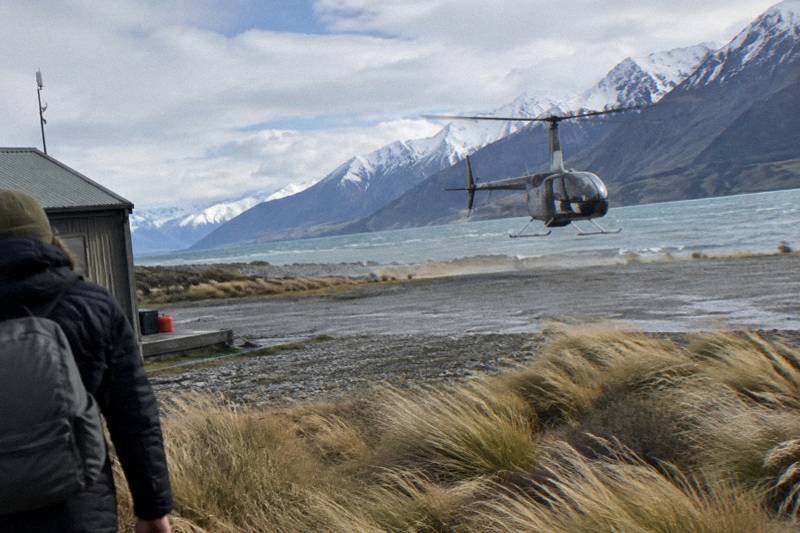
Is A Helicopter Alpine Landing The Same As A Glacier Landing?
No, an alpine landing and a glacier landing are different products at Mount Cook: here is what each one means, which flights offer them, and what they cost.
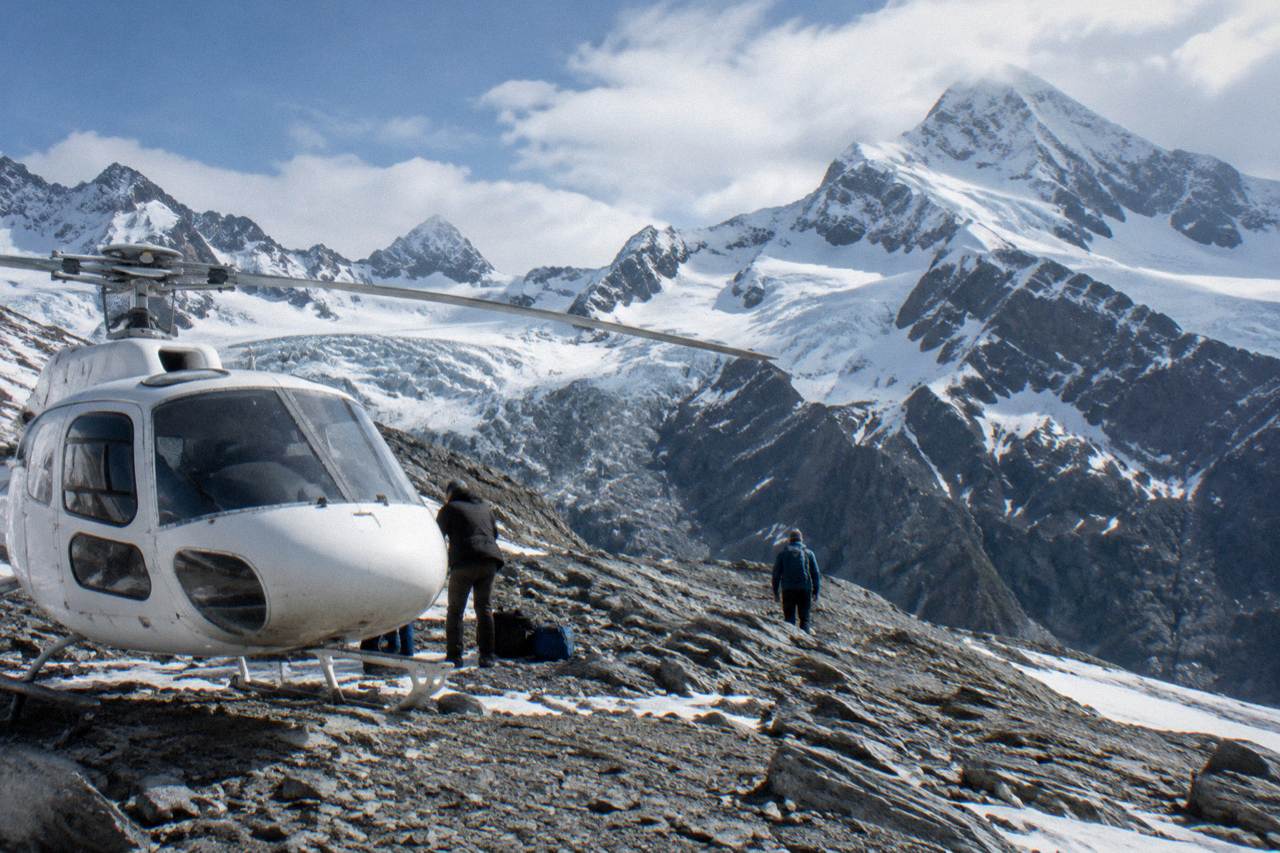
No, they are different. An alpine landing sets a helicopter down on a rocky or snowy high point inside Aoraki / Mount Cook National Park that is not a glacier, while a glacier landing touches down on glacier ice, at Mount Cook usually the Tasman Glacier. Of the 34 flights covered here, 16 offer a glacier landing, 9 a snow landing where no glacier is named, and 4 an alpine landing.
The two are easily confused because operators use the word "landing" loosely in headlines, and because both involve stepping out of a helicopter somewhere cold and spectacular. But the ground under your boots is a different fact, and so is the price. The cheapest per-person flight on this site, from $196, is an alpine landing flight, while the cheapest listing with a named glacier landing, from $280, is a ski plane and helicopter combo that touches down on the Tasman. A reader checking what a landing means is usually choosing between exactly these two kinds of ticket.
The distinction also explains why flights of similar length cost different amounts. A glacier landing means flying onto live ice, where the operator works with a landing zone on the glacier itself, while an alpine landing uses a mountain site such as a ridge or a high basin. Mount Cook Ski Planes and Helicopters, whose operator FAQ spells the difference out, describes its alpine landing sites as Brass Peak or Liebig Dome, high points that may be snow-free in the heat of summer, roughly December to March. Neither experience is a lesser version of the other; they are different products with different planning implications.
The rest of this article walks through what each landing type actually involves, which named flights offer them, how cost and duration compare across the 34 flights covered here, and how a third category, the snow landing, fits in. Every price below is per person in US dollars from the flight details themselves, and no landing on any flight is ever a promise: weather and the pilot decide on the day. If you want the wider picture of where each flight type sits in the market, the guide to glacier landings versus flyovers at Mount Cook covers the no-landing option too.
What Does An Alpine Landing At Mount Cook Actually Mean?
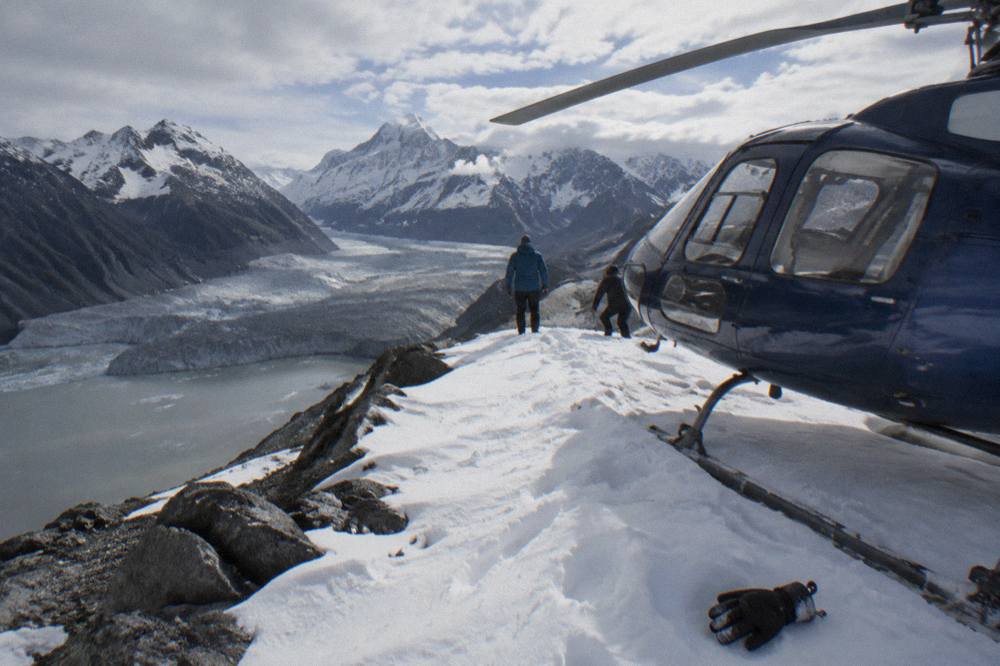
An alpine landing is a touchdown on a mountain site inside the park rather than on glacier ice. At Mount Cook the named alpine sites include Brass Peak, Liebig Dome and, on one flight, the Ben Ohau Range. The site can be snow-covered or bare rock depending on the season, and Mount Cook Ski Planes and Helicopters says its alpine sites may be snow-free about December to March. Four of the 34 flights covered here offer one.
Think of it as a high stopover. The helicopter climbs to a saddle, ridge or basin, lands, and cuts the engine or holds position while passengers step out for photographs. Landing flights on the Tasman side of the park reach about 2,200 metres, so even an alpine stop feels genuinely high, and the operator notes landing sites typically run 1 to 3 degrees cooler than the airport. The view from a ridge can be broader than the view from a glacier basin, because you are often looking down at the ice rather than standing inside it.
The seasonal point deserves emphasis because it is the single most common surprise. A glacier landing sets you down on ice, but an alpine site in midsummer can be grey schist with a few patches of old snow, and sites and snow conditions vary by season. Some travellers prefer that: rock underfoot, a long ridgeline panorama and no glare. Others arrive expecting a winter postcard and feel shortchanged. Mount Cook Ski Planes frames it softly, saying the alpine landing may be snow-free in the heat of summer, which is the honest way to plan around it.
Practically, an alpine landing is also the cheapest way to get out of the aircraft anywhere in this park. The Mount Cook: Scenic Helicopter Flight with Alpine Landing from Mount Cook Ski Planes and Helicopters is a 25-minute flight from $196 per person, rated 4.8 across 536 reviews, making it both the cheapest per-person flight and the most reviewed product on this site. It passes by the Tasman on route, so you still see a glacier from the air; you simply do not land on one.
What Is A Glacier Landing On The Tasman Glacier?
A glacier landing sets the aircraft down on the ice of a glacier, and at Mount Cook that glacier is the Tasman, New Zealand's longest at about 23 kilometres and up to 3 kilometres wide. Sixteen of the 34 flights covered here include one. Time on the snow, where the operator states it, is generally 10 to 15 minutes, and the landing happens somewhere on the upper glacier rather than at a scenic lookout.
This is the experience most people picture when they say "glacier flight". The Tasman is the country's largest glacier, its ice about 600 metres deep near the Hochstetter Icefall, and a landing puts you inside that landscape rather than above it. The operator text for the Grand Circle and Ultimate Alpine flight lines names the Tasman Terminal Lake, the Grand Plateau, Plateau Hut, the Hochstetter Icefall and Aoraki's east face as features on those routes, and Aoraki / Mount Cook itself stands at 3,724 metres, the tallest peak in the country. Glaciers cover roughly 40 percent of the national park, all of it inside the Te Wahipounamu World Heritage Area, which the Department of Conservation documents on its Aoraki / Mount Cook National Park page.
The glacier landing category spans a wide price band at Mount Cook. The Mount Cook: Ski Plane and Helicopter Glacier Combo Flight is the entry point, from $280 per person, rated 4.7 across 380 reviews, and it is the cheapest listing here with a named glacier landing as well as the most reviewed glacier landing flight. It is a 45-minute ski plane and helicopter combination that touches down on the Tasman. From there the category climbs through the 45-Minute Glacier Highlights flights from $401.73, one by helicopter rated 4.8 across 59 reviews and one by ski plane rated 5.0 across 21, up to the two 3-hour heli hikes at $558, which land on the glacier and then walk it with a guide. To see how those ratings translate into actual passenger experiences, the detailed comparison of Mount Cook helicopter reviews covers what travelers praise and complain about across every flight type.
The heli hikes are the clearest illustration that "glacier landing" is a means, not an end. The Mount Cook: 3-Hour Tasman Glacier Helicopter Ride and Hike, rated 4.9 across 347 reviews, includes about 15 minutes of helicopter flight each way and up to two hours walking on the ice. The landing is the door into a guided glacier trip, not a photo stop. If your interest is standing on ice for a quarter of an hour with the engine off, the shorter landing flights do that; if your interest is the glacier as terrain, the hike versions exist for exactly that reason. Weather rules apply to all of them: the flights are weather dependent, and the landing itself is always the pilot's call on the day.
Which Mount Cook Flights Have An Alpine Landing And What Do They Cost?
Four alpine landing flights run from $196 to $545.25 per person, two departing Mount Cook Airport or Bowen Drive and two from Glentanner Park. The cheapest is the Mount Cook: Scenic Helicopter Flight with Alpine Landing at $196 for 25 minutes; the others are $221 for 30 minutes, $350.73 for 35 minutes, and the 55-minute multi-glacier flight at $545.25, which lands at an alpine site despite its glacier-heavy name.
The table below is the full alpine landing set, using only the figures from the flight details themselves. Note the last row in particular: the Mount Cook and The Glaciers 55-Minute Helicopter Flight, from The Helicopter Line, is the most reviewed multi-glacier flight at 4.7 across 142 reviews and it names the Tasman, Fox and Franz Josef glaciers on its route, but its landing is an alpine landing, not a glacier landing. Travellers booking it for an ice touchdown are booking the wrong product, which is precisely the confusion this page exists to clear up.
| Flight | Operator | Departs from | Total duration | From (USD, per person) | Rating and reviews |
|---|---|---|---|---|---|
| Mount Cook: Scenic Helicopter Flight with Alpine Landing | Mount Cook Ski Planes and Helicopters | Mount Cook Airport | 25 minutes | $196.00 | 4.8 across 536 reviews |
| Mount Cook: Helicopter Flight with Alpine Landing | Glacier Helicopters | Bowen Drive, Mount Cook | 30 minutes | $221.00 | 4.9 across 50 reviews |
| Mount Cook Alpine Explorer Helicopter Flight with Alpine Landing | The Helicopter Line | Glentanner Park | 35 minutes | $350.73 | 4.2 across 27 reviews |
| Mount Cook and The Glaciers 55-Minute Helicopter Flight | The Helicopter Line | Glentanner Park | 55 minutes | $545.25 | 4.7 across 142 reviews |
Each row tells a slightly different story. The $196 flight is the value pick and the most reviewed product on this site, with the Tasman passed by on route. The $221 flight from Glacier Helicopters carries a 4.9 rating across 50 reviews, and its operator's own FAQ is unusually candid about landings: it says it tries for a landing and tells guests at check-in if one may not happen. Every landing flight on this page shares that condition: the landing, alpine or glacier, is weather dependent. The Alpine Explorer from The Helicopter Line, at 4.2 across 27 reviews, spends 10 minutes on the snow and flies the Ben Ohau Range with views toward Aoraki and the Tasman Valley. The premium 55-minute sweep takes in the Tasman, Fox and Franz Josef glaciers and Aoraki, with an alpine landing.
If choosing between the two cheapest, the honest framing is duration and operator rather than landing quality, since both stop at an alpine site. One gives you 25 minutes and 536 reviews of track record; the other 30 minutes, a higher rating from a smaller pool of 50, and a Glacier Helicopters base on Bowen Drive. Either way, free cancellation for a full refund up to 24 hours before the start is stated on all 34 booking pages, which makes an early booking in a stay low-risk while the weather decides.
Which Mount Cook Flights Land On The Glacier Itself?
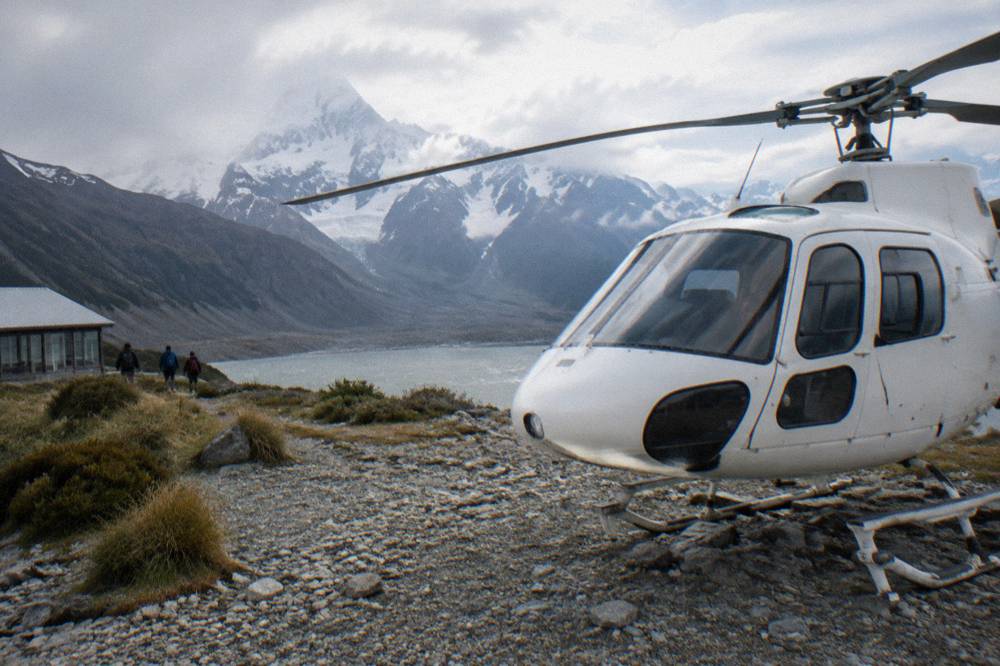
The glacier landing flights from the Mount Cook area run from $280 to $558 per person, most of them landing on the Tasman. The entry point is the Ski Plane and Helicopter Glacier Combo at $280, then the 40-to-50-minute landing flights between $373 and $468.61, and finally the two 3-hour heli hikes at $558. Within the wider set of 34, glacier landing flights also depart Fox Glacier and Franz Josef on the West Coast.
Starting from Mount Cook Airport, the combo flight is the one most first-time visitors land on, in both senses. It is a 45-minute experience combining a ski plane and a helicopter, rated 4.7 across 380 reviews, the largest review pool of any glacier landing flight here, and its operator's weather terms are generous: tours are refundable if there is a cancellation due to weather, and the operator will work with you to reschedule. The step up from there buys either aircraft type or time. The 45-Minute Glacier Highlights flights, helicopter or ski plane, both from $401.73, include 10 to 15 minutes on the snow and reach the Hochstetter Icefall, with the ski plane version carrying a 5.0 rating across 21 reviews. The full index of guides sits on Mount Cook Glacier Flight.
At the 40-minute mark sit two $373 options: the Tasman Glacier Helicopter Flight from Glacier Helicopters, rated 4.8 across 13 reviews, and the Tasman Glacier and National Park Scenic Flight from Southern Lakes Helicopters, rated 4.7 across 22 reviews with 40 stated flight minutes. The Mountains High 40-Minute Helicopter Flight from The Helicopter Line, rated 4.8 across 61 reviews from $409.68, adds 5 to 10 minutes on the snow. Hotel pickup is a mixed picture across these products: stated not included on some, and simply not mentioned on others, in which case ask the operator directly rather than assuming either way.
The heli hikes at $558 sit at the top of the per-person band and change the category. Both are 3-hour experiences: the Mount Cook: 3-Hour Tasman Glacier Helicopter Ride and Hike from Mt Cook Glacier Guiding, rated 4.9 across 347 reviews, and the Mount Cook: 3-Hour Heli Hike to the Tasman Glacier from The Helicopter Line, rated 4.8 across 270, which states a minimum age of 10 and hotel pickup and drop-off in Mount Cook Village. For anyone weighing whether the walking adds enough to justify roughly double the combo price, the comparison in whether a glacier flight beats walking to the Tasman is the companion read.
The combo flight, being the cheapest glacier landing and the most reviewed of its kind, earns its place as the natural first check for anyone whose heart is set on ice underfoot:
Do Snow Landings Count As Glacier Landings At Mount Cook?
Not exactly, and the wording matters. Nine of the 34 flights offer a snow landing where the booking details do not name a glacier; these are West Coast departures from Fox Glacier and Franz Josef that touch down on high snowfields. A glacier landing names the ice, usually the Tasman. A snow landing promises snow, not a specific glacier, so treat the two as separate categories when comparing.
The distinction is clearest in the product names themselves. The Fox Glacier and Mount Cook Helicopter Flight with Snow Landing, from The Helicopter Line and rated 4.9 across 50 reviews from $291.78, lands on snow and flies Fox Glacier with views toward Aoraki / Mount Cook. The Ultimate Discovery: 3 Glaciers and Snow Landing, 45 minutes from $399.43 and rated 4.8 across 136 reviews, overflies Franz Josef, Fox, Tasman and Mount Cook and lands on snow somewhere along the route. On the 30-minute Tasman Experience from Franz Josef, the pilot picks the landing spot on the day. None of that makes the landing lesser; high snowfields above the West Coast glaciers are dramatic places. It simply means you cannot tell from the words "snow landing" which piece of ice or snow you will be standing on.
One more nuance from the verified operator wording: Mount Cook Ski Planes says snow landings are possible on the Tasman in any month, while its alpine sites may be snow-free in midsummer. That cuts against the intuitive assumption that a glacier landing is the one at risk in summer. If guaranteed white ground matters to you more than glacier ice specifically, ask the operator at booking which landing site the flight uses and what it looks like in the season you are travelling. NIWA publishes the survey work at niwa.co.nz.
For the full West Coast picture, including which Franz Josef and Fox flights actually name Aoraki / Mount Cook on their routes, see the guide to Fox Glacier helicopter flights and the Franz Josef equivalent.
Does The Landing Type Change The Price Or The Flight Length?
Yes, though less than you might expect once duration is equalised. The cheapest per-person flight, $196, is an alpine landing flight, and the cheapest named glacier landing is $280, but the gap mostly reflects flight length: 25 minutes against 45. At matched durations the two landing types overlap, with 40-minute glacier landing flights at $373 to $409.68 and the 35-minute alpine Explorer at $350.73.
In other words, you are paying primarily for minutes in the air and aircraft type, and only secondarily for the kind of touchdown. The two 55-minute Grand Circle flights from Mount Cook Airport, $459.20 each, land on the glacier, with the ski plane version rated 5.0 across 16 reviews; the 55-minute multi-glacier helicopter at $545.25 lands at an alpine site. Same minutes, same area, different ground, and the more expensive of the three is the alpine one. The landing type alone is a poor predictor of price.
What the landing type does change is what you should pack and expect underfoot. Mount Cook Ski Planes tells guests to wear warm layers, sunglasses for strong snow glare and sturdy closed-toe shoes, notes that seats are assigned by weight and balance rather than chosen, and prohibits drones and selfie sticks on all its flights. The Helicopter Line weighs passengers at check-in, asks for a camera on a strap, and advises leaving loose scarves and bags behind. Those rules apply regardless of whether the touchdown is ice, snow or rock. Recreational drones are banned everywhere in the national park, per the Department of Conservation.
Two further practical points close the planning loop. First, timing: Mount Cook Ski Planes and Helicopters makes its weather call anywhere from early morning to about 10 minutes before departure, while The Helicopter Line makes its final call one hour out, so booking the first day of a stay leaves room for a rebook. Second, money risk: free cancellation for a full refund up to 24 hours before the start is stated on all 34 booking pages here, and each operator carries its own weather terms, so read the specific flight's policy rather than assuming one covers all. The broader price landscape, including the two private charters priced per group rather than per person, is mapped in the Mount Cook glacier flight price comparison.
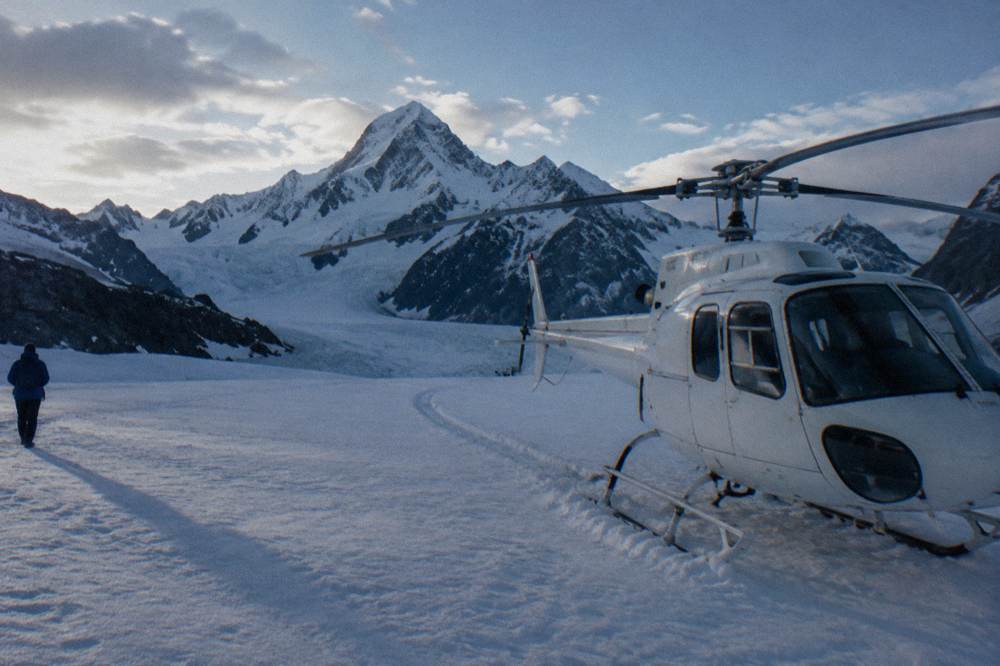
Which Mount Cook Landing Flight Should You Actually Book?
Book the $196 alpine landing flight if you want the cheapest, most reviewed way to step out of a helicopter in this park, and the $280 ski plane and helicopter combo if you specifically want to stand on the Tasman Glacier. Those two decisions, budget versus ice underfoot, settle the question for most travellers. Everything else is refinement: more minutes, more glaciers, or a guided walk.
The middle options earn their prices for specific travellers. The 30-minute alpine flight from Glacier Helicopters at $221, rated 4.9 across 50 reviews, suits someone who wants a little more air time than the 25-minute minimum without a big jump in cost. The 55-minute Grand Circle flights at $459.20 suit the glacier collector, crossing the Main Divide to see the Fox and Franz Josef glaciers as well as the Tasman, with 10 to 15 minutes on the snow where the operator states snow time. The heli hikes at $558 suit the traveller whose real interest is the ice as terrain rather than as scenery.
And if the honest answer is that you do not much care what the ground is called as long as the flight is spectacular, the alpine landing flights are not a compromise choice. The most reviewed product on this entire site is an alpine landing flight, 536 reviews at 4.8, and the $545.25 multi-glacier flagship lands alpine too. The word "alpine" is not a discount label; it is simply a different destination, and at Mount Cook the different destinations are all worth the seat.
Whatever you choose, the same three rules protect the booking: get the dates and availability checked early in planning, book for the first day of your stay so weather has room to shuffle, and hold the 24-hour free cancellation until you are sure. The three flights below are the natural shortlist for the alpine-versus-glacier decision:
Common Questions About Alpine And Glacier Landings
Is A Helicopter Alpine Landing The Same As A Glacier Landing?
No. An alpine landing touches down on a mountain site inside Aoraki / Mount Cook National Park, such as Brass Peak, Liebig Dome or the Ben Ohau Range, while a glacier landing touches down on glacier ice, at Mount Cook usually the Tasman Glacier. Of the 34 flights covered here, 4 offer an alpine landing and 16 offer a glacier landing.
Which Is Cheaper At Mount Cook, An Alpine Landing Or A Glacier Landing?
The cheapest per-person flight on this site, from $196, is the 25-minute Scenic Helicopter Flight with Alpine Landing, and the cheapest with a named glacier landing is the Ski Plane and Helicopter Glacier Combo at $280. The gap mostly reflects duration, 25 minutes of flight against a 45-minute experience, not the landing type itself.
Can An Alpine Landing Site Be Bare Rock In Summer?
Yes. Mount Cook Ski Planes and Helicopters says its alpine landing sites, Brass Peak and Liebig Dome, may be snow-free in the heat of summer, roughly December to March. Snow landings on the Tasman are described by the operator as possible in any month.
What Is A Snow Landing, Then?
A snow landing is a touchdown on high snow where the booking details do not name a glacier. Nine flights here offer one, all departing Fox Glacier or Franz Josef on the West Coast. It promises snow, not a specific glacier, so it sits between the alpine and glacier categories.
Is The Landing Guaranteed On Any Mount Cook Flight?
No. On every landing flight, the touchdown is weather dependent and made at the pilot's discretion. Glacier Helicopters says it tries for a landing and tells guests at check-in if one may not happen, which is the honest framing for all of them. Weather cancellations are handled under each operator's own terms.
How Long Do You Get On The Ground After A Landing?
Only where an operator states it: 10 to 15 minutes on the snow for the Glacier Highlights and Grand Circle flights, 5 to 10 minutes on the Mountains High flight, and 10 minutes on the Alpine Explorer. Where no ground time is given, do not assume a figure; the heli hikes are the exception, with up to two hours on the glacier.