Mount Cook Glacier Flight By Season: Snow Cover And Light
Every season changes what a glacier flight over Aoraki / Mount Cook can deliver: snow cover on the Tasman, the hours of daylight you fly in, and the odds the weather lets the flight go at all.
Short answer
No month is objectively best, and no operator here claims one. Mount Cook Ski Planes offers Tasman landing flights in every season and says its alpine landing sites may be snow-free from about December to March. Per-person prices run from $196 to $695.41 across the 34 flights and do not change by month, so timing is about snow, daylight and weather odds, not fare.
What Is The Best Season For A Mount Cook Scenic Flight?
No single month is the best, and none of the operators here make that claim. Mount Cook Ski Planes offers its Tasman landing flights in every season, and says snow landings on the Tasman are possible in all of them, while its lower alpine landing sites may be snow-free in the heat of summer, roughly December to March. The honest answer is that season changes what you fly over, not whether you can fly.
That framing matters because most advice about the "best season" for a New Zealand glacier flight is invented. The operators whose wording is on record say three concrete things. First, Mount Cook Ski Planes offers Tasman landing flights in every season and says snow landings on the Tasman are possible at any time of year. Second, the same operator says its alpine landing sites, such as Brass Peak or Liebig Dome, may be snow-free in the heat of summer, about December to March, which changes what you stand on, not what you see from the air. Third, Air Safaris describes its main season as October to April and says that in that window it flies on up to 85 percent of days, which is that operator's own wording about its own operation and cannot be extended to anyone else.
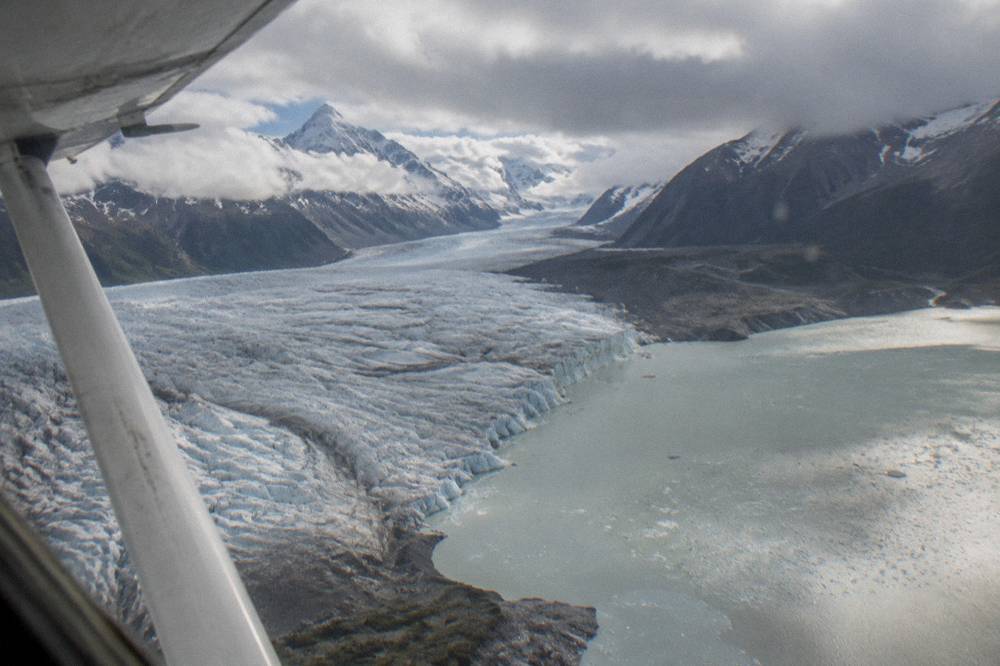
Aoraki / Mount Cook itself does not take a season off. The peak stands 3,724 metres tall, the tallest in New Zealand, inside a national park where glaciers cover roughly 40 percent of the land and 19 peaks rise above 3,000 metres, according to the Department of Conservation. The Tasman, the country's largest and longest glacier at about 23 kilometres, is visible from the main highway at the park entrance in any month. A flight simply shows it to you from a different angle, and the angle is largely the same in June as in January.
What does shift, meaningfully, is the texture of the landscape below. Operators describe the neves and high plateau snowfields as holding snow year-round, so the upper glaciers read as continuous white. Midsummer trades some of that snow lower down for harder light, longer shadows late in the day, and ice features that show their structure more clearly where the snow has thinned. Autumn sits between the two, often with calmer, cooler air. Those are qualitative differences a pilot or photographer would argue about over coffee; none of them is a reason to call one season the winner.
| Season | Snow cover on the ranges | Landing surface implications | Typical feel |
|---|---|---|---|
| Summer, December to February | Thinnest at low altitude, holds on the Tasman's upper ice | Alpine sites may be snow-free; Tasman snow landings possible | Hard light midday, long early and late light |
| Autumn, March to May | Rebuilding from the first autumn snows | Alpine sites regaining snow late in the season | Often calmer, cooler air |
| Winter, June to August | Deepest and most continuous | Tasman snow landings possible; best odds of snow at alpine sites | Low sun, compressed daylight |
| Spring, September to November | Deep snow with warming, volatile weather | Tasman snow landings possible | Fast-changing conditions between systems |
The practical planning question is therefore not "which month is best" but "which trade-offs suit this trip": snow on the landing site, daylight for the flight window, weather risk and how many spare days you have to absorb a cancellation. The sections below take those one at a time. For a full breakdown of what each flight costs, see the guide to Mount Cook glacier flight prices compared; the short version is that prices are fixed per listing, not per month.
Which Seasons Offer Snow Landings At Mount Cook?
Snow landings on the Tasman Glacier are possible in every season, in the words of Mount Cook Ski Planes, which operates Tasman landing flights through the whole year. Its lower alpine landing sites, on the other hand, may be snow-free from about December to March, so a summer booking changes the ground under your boots. No landing is ever promised: weather and the pilot decide on the day.
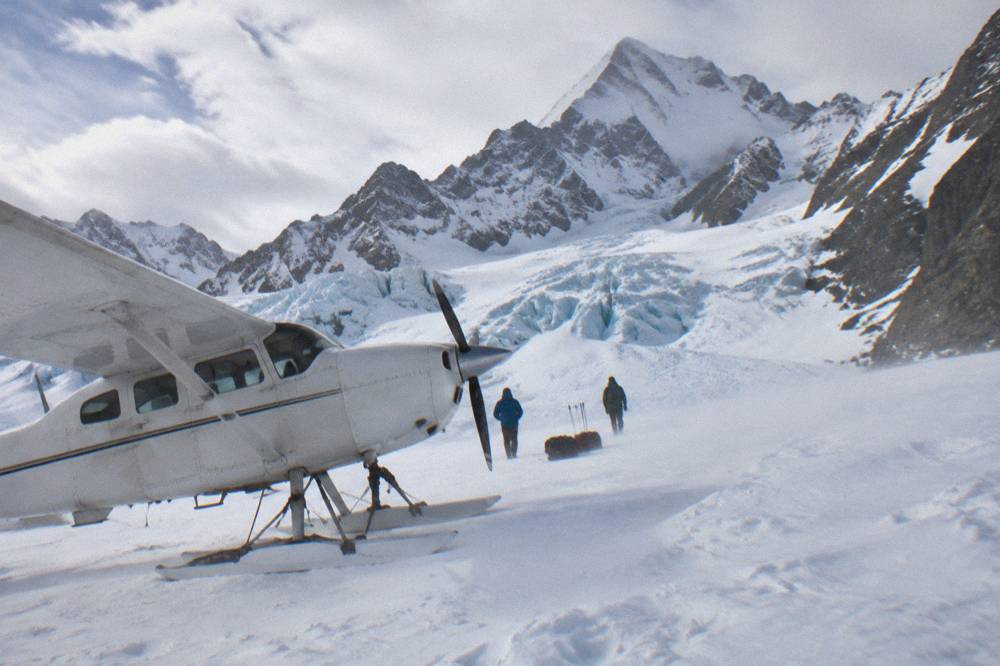
This is the one place where season genuinely changes the product. A glacier landing flight puts you down on ice, and the Tasman holds enough snow at altitude for Mount Cook Ski Planes to offer that landing in every season. Its Grand Circle products name the Tasman, Franz Josef and Fox glaciers, and its Glacier Highlights flights name the Tasman and the Hochstetter Icefall, with 10 to 15 minutes on the snow stated for those products. An alpine landing is a different thing: a mountain site rather than a glacier, and those sites, Brass Peak or Liebig Dome by that operator's wording, sit lower and can lose their snow in the warmest months. If standing on snow in January is the point of the booking, a glacier landing flight is the safer match than an alpine one.
The distinction runs through the whole flight selection here. Among the 34 flights covered here, 16 include a glacier landing, 9 a snow landing where the glacier is not named, 4 an alpine landing, 3 skip the landing entirely, and 2 make no mention of one. Four flights include an alpine landing. Three are short Mount Cook departures: the Mount Cook: Scenic Helicopter Flight with Alpine Landing from Mount Cook Ski Planes, from $196.00 per person, the Mount Cook: Helicopter Flight with Alpine Landing from Glacier Helicopters, from $221.00 per person, and the Mount Cook Alpine Explorer Helicopter Flight with Alpine Landing from The Helicopter Line, from $350.73 per person. The fourth runs 55 minutes: the Mount Cook and The Glaciers 55-Minute Helicopter Flight, from $545.25 per person. The cheapest glacier landing listing is a different product entirely: the Mount Cook: Ski Plane and Helicopter Glacier Combo Flight, from $280.00 per person with 380 reviews.
Season also nudges what you should wear, whatever the landing type. Mount Cook Ski Planes tells guests to bring warm layers, sunglasses for the strong snow glare and sturdy closed-toe shoes, and notes that landing sites are typically 1 to 3 degrees cooler than the airport. That is worth taking seriously in summer too: a snow landing at about 2,200 metres on the Tasman in January is still a snow landing, and a t-shirt at the airfield is not enough at the top. The Helicopter Line gives similar advice, a warm jacket, sturdy shoes, sunglasses and a camera on a strap, and asks guests to leave loose scarves and bags behind.
Time on the snow, where it is stated at all, belongs to each flight and cannot be borrowed for another. The Glacier Highlights and Grand Circle products state 10 to 15 minutes, the Mountains High flight states 5 to 10, and the Alpine Explorer states 10. Never assume two flights with the same price share the same snow time. For the deeper question of whether landing flights are worth the premium, the guide to glacier landings versus flyovers at Mount Cook works through it flight by flight.
How Does Daylight Change A Mount Cook Flight Through The Year?
New Zealand daylight saving began 27 September 2026 and runs until early April 2027, giving summer flights the longest useful windows, while midwinter compresses morning and afternoon departures into a handful of bright hours. Daylight affects when flights can run, not what they cost, and it is the strongest practical argument for matching your booking to the season rather than the fare.
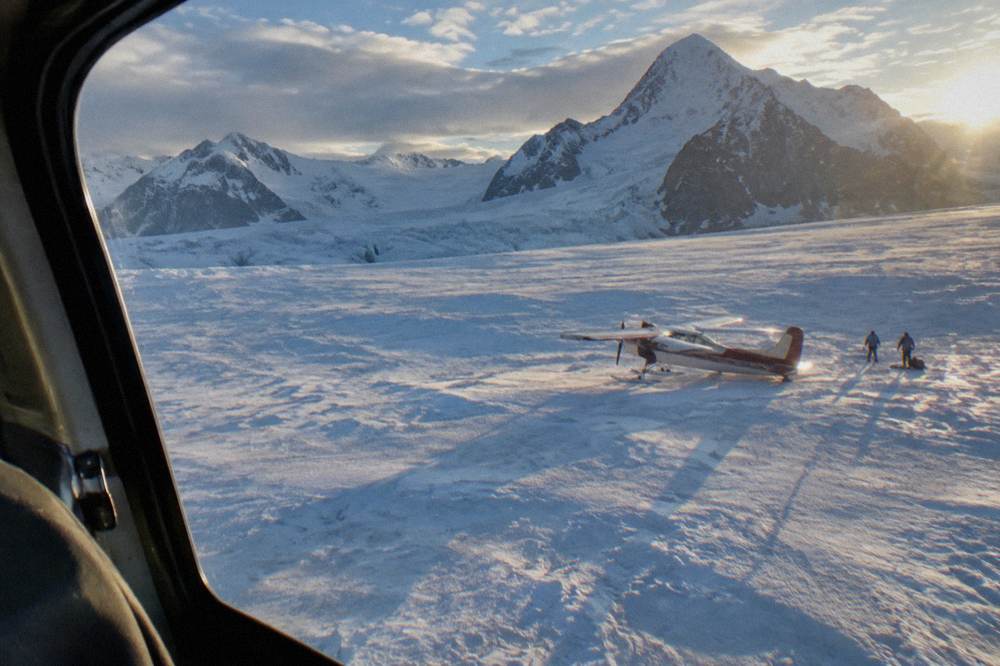
Midsummer flights leave from Mount Cook Airport on SH80, Glentanner Park, and Lake Tekapo. Operators do not schedule across all of it, but a long day spreads demand, softens the pressure on any single departure slot, and gives you a genuine second chance if the morning weather call goes against you. Midwinter is the mirror image: every flight gets squeezed into the middle of the day and the late-afternoon fallback disappears, so aim for the slot you actually want when you book. If a June flight is cancelled, the rebooking conversation usually points to the next morning, not a later slot the same day.
| Season | Clock setting | Practical daylight for flights | What it means for booking |
|---|---|---|---|
| Summer, December to February | NZDT | Longest window, early starts and late light possible | Most slots, most rebooking flexibility |
| Autumn, March to May | NZDT to early April, then standard time | Long days shrinking through the season | Good light, thinning schedules late in autumn |
| Winter, June to August | Standard time | Concentrated mid-morning to mid-afternoon | Few usable hours; a cancellation usually means the next day |
| Spring, September to November | Standard time to 27 September changeover, then NZDT | Rapidly lengthening days from September | Improving options week by week through the season |
The changeover itself is worth knowing. Daylight saving began on 27 September 2026 and ends in early April 2027, so a spring or autumn trip can straddle a clock change, which matters if you are coordinating a self-drive arrival with a check-in time. Operators ask guests to arrive by the check-in time given in the booking email, and in shoulder seasons that time can land closer to dusk than you expect after the clocks move.
Light quality is the photographer's angle on the same question. Summer sun at this latitude climbs high and hard by midday, flattening snow textures, while early and late summer flights rake low light across the glacier neves and crevasse fields. Winter's low sun does that all day. None of this is an operator claim, it is simply how a high southern latitude behaves, and it is a fair personal reason to prefer one season without any season being "best". For how flight lengths themselves compare, see the guide to how long a Mount Cook glacier flight lasts.
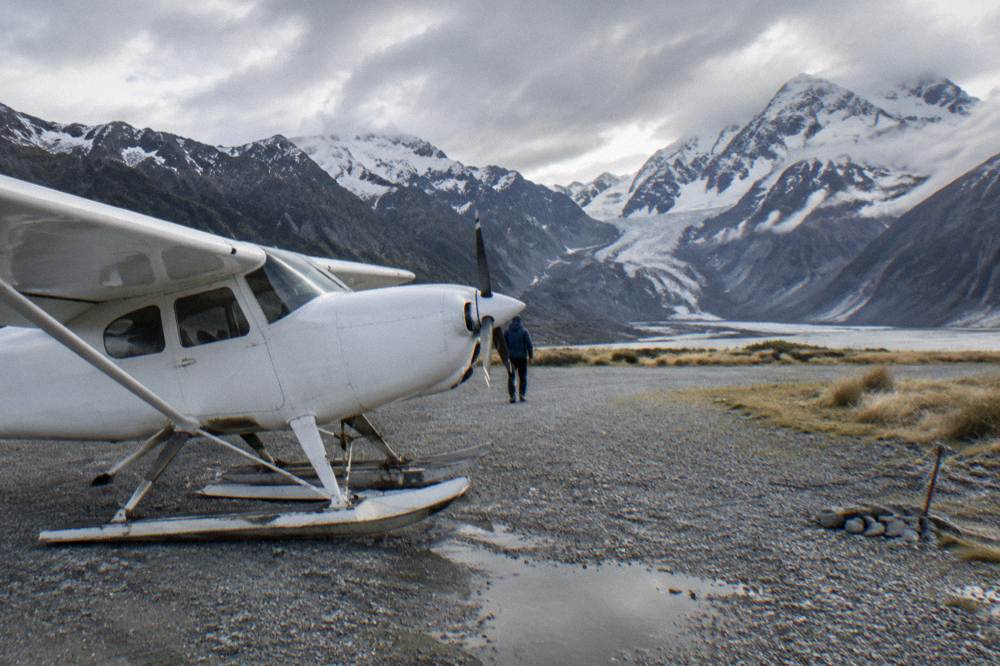
One daylight trap worth naming: booking a winter day trip from Queenstown that bundles a flight. The Mt Cook Tour & Ultimate Alpine Experience Combo from Queenstown runs 12 hours, and its operator, Cheeky Kiwi Travel, says the alpine flight is very dependent on the weather with the go decision made on the day. A winter cancellation on a day trip costs you the whole coach loop, not just the flight, so a shorter flight from a Mount Cook base gives a winter trip more room to recover.
Do Glacier Flight Prices Change With The Season?
No. All 34 flights here show from-prices on the live booking page, starting at $196.00 per person for the cheapest, an alpine landing flight, and reaching $695.41 per person for the longest day-trip combo, with two private charters priced per group instead. Check the booking page for the current figure before you book. Season changes availability and weather odds, not the fare on the booking page.
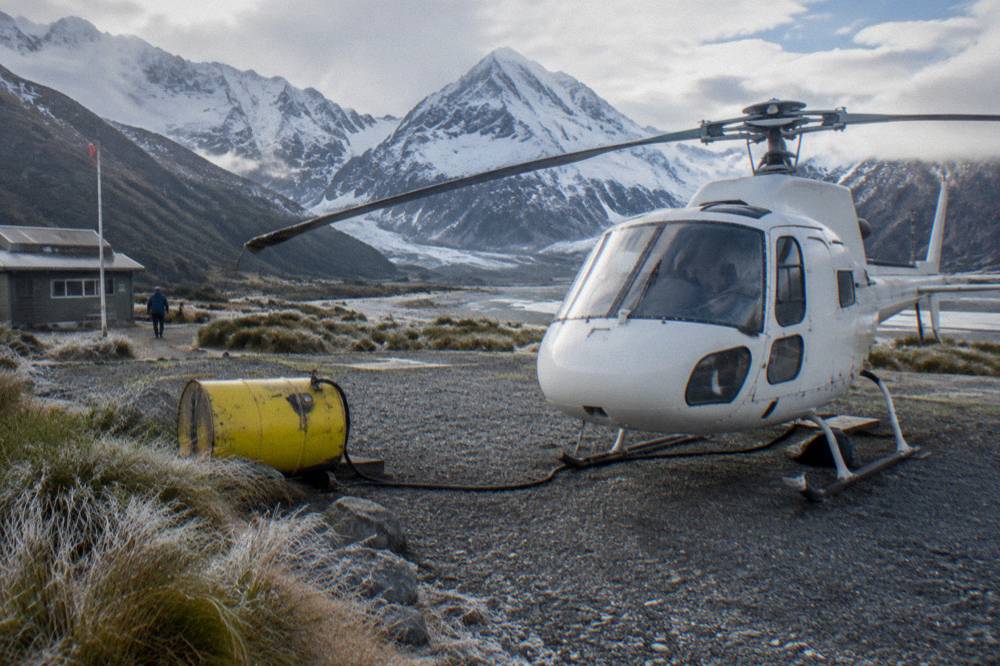
That flatness is worth spelling out because travellers often assume peak season means peak prices, as it does with hotels. These flights are priced per listing: the 55-minute Mount Cook and The Glaciers Helicopter Flight from The Helicopter Line sits at from $545.25 per person whether it is booked for July or February, and the same holds down the list. The $196.00 Mount Cook: Scenic Helicopter Flight with Alpine Landing, with 536 reviews the most reviewed flight covered here, and the $280.00 Ski Plane and Helicopter Glacier Combo, with 380 reviews, are exactly the kind of high-demand, lower-cost products that need early booking for summer dates.
| Flight | Operator | Price basis | Landing type | Stated duration |
|---|---|---|---|---|
| Mount Cook: Scenic Helicopter Flight with Alpine Landing | Mount Cook Ski Planes | from $196.00 per person | alpine landing | 25 minutes |
| Mount Cook: Helicopter Flight with Alpine Landing | Glacier Helicopters | from $221.00 per person | alpine landing | 30 minutes |
| Mount Cook: Ski Plane and Helicopter Glacier Combo Flight | Mount Cook Ski Planes | from $280.00 per person | glacier landing | 45 minutes |
| Mount Cook Alpine Explorer Helicopter Flight with Alpine Landing | The Helicopter Line | from $350.73 per person | alpine landing | 35 minutes |
| 55-Minute Grand Circle Ski Plane | Mount Cook Ski Planes | from $459.20 per person | glacier landing | 1 hour 5 minutes total |
| Lake Tekapo: 50-Minute Mount Cook and Beyond Scenic Flight | Air Safaris | from $317.00 per person | no landing | 50 minutes flight, 60 total |
The two private charters, from $1,494.27 and $1,982.78 per group with Glacier Country Helicopters out of Franz Josef, are the only per-group prices in the set and never belong in a per-person comparison. One seasonal footnote applies on the West Coast side: Glacier Helicopters notes it operates weather permitting and runs only the morning of Christmas Day. Check-in practicalities matter more than the fare: every flight here states free cancellation up to 24 hours before the start for a full refund, which is a booking rule, not a weather policy, and weather terms belong to each operator separately.
If price is the main constraint, the season question almost answers itself. Book the flight type you actually want, glacier landing, snow landing, alpine landing or flyover, at its listed price, and spend your seasonal thinking on daylight and weather flexibility instead. Base location, covered in the guide to Mount Cook helicopter departure points, is often a bigger driver of convenience than the fare gap.
How Does Weather Risk Change With The Season?
Air Safaris is the only operator here that publishes a fly-rate by season: up to 85 percent of days from October to April, in its own wording. The others describe their flights as weather dependent without a monthly figure. The real seasonal lever is not the odds but your recovery time: how many spare days you hold at Mount Cook if the weather call goes against you.
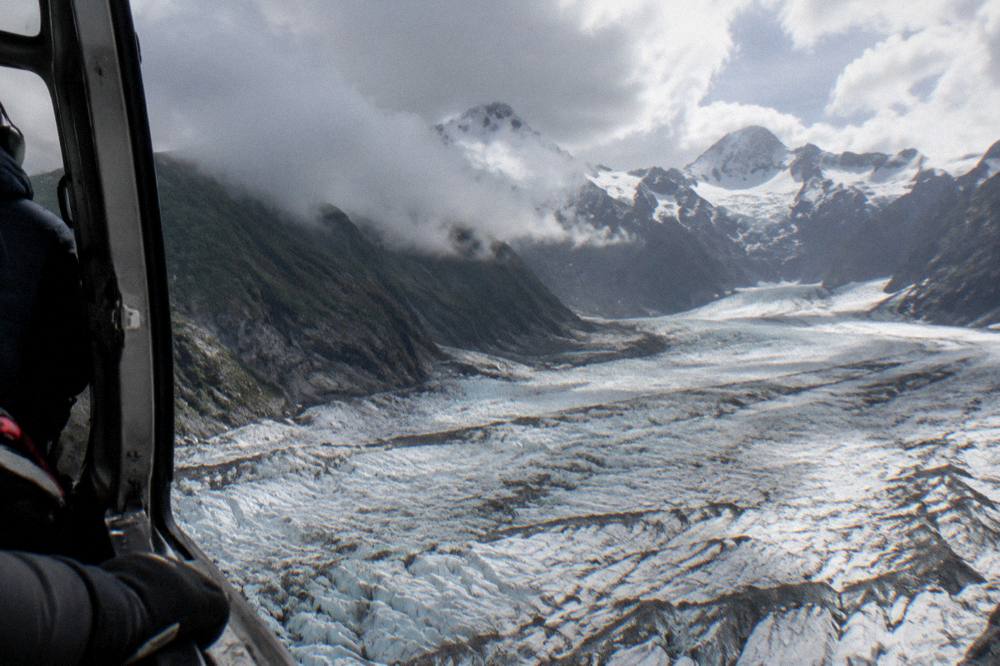
Weather in the Southern Alps can change fast in any month, and the operators are blunt about their decision windows. The Helicopter Line says its final weather call comes about an hour before departure. Mount Cook Ski Planes and Helicopters says the decision can come any time from early morning to about 10 minutes before departure, which is why it advises booking the first day of your stay: it leaves the rest of the stay as a fallback. NIWA's seasonal outlook for November 2026 to January 2027 favours above-normal rainfall in the Southern Alps, one concrete pointer for summer trip planning in the current season, though it is an outlook, not a forecast of your flight day.
Each operator's cancellation terms are its own. The Helicopter Line offers a new date or a full refund if it cancels for weather. Mount Cook Ski Planes' 55-minute scenic flight states weather cancellations are 100 percent refundable, with a full refund if an updated date cannot work. Its Glacier Highlights and Grand Circle products say flights may be cancelled due to weather conditions. Glacier Helicopters says flights, landings and routes may vary with weather and at the pilot's discretion, and its FAQ says it tries for a landing and tells guests at check-in if one may not happen. Southern Lakes Helicopters says all its flights are weather dependent. None of these can be generalised to "glacier flights" as a group, and the 24 hour free cancellation window is a separate booking rule entirely. Since weather shapes not just whether a flight runs but the route it takes, the guide to the best view of Mount Cook on a glacier flight explains which side of the aircraft to aim for.
| Operator | Weather wording in its own terms | When the decision comes |
|---|---|---|
| The Helicopter Line | New date or full refund if cancelled for weather | Final call about an hour before departure |
| Mount Cook Ski Planes and Helicopters | Weather cancellations refundable; flights may be cancelled due to weather conditions | Early morning to about 10 minutes before departure |
| Glacier Helicopters | Flights, landings and routes may vary with weather and pilot discretion | Guests told at check-in if a landing may not happen |
| Southern Lakes Helicopters | All flights are weather dependent | - |
| Air Safaris | All flights subject to favourable weather; recommends booking the first available day | - |
The seasonal pattern worth internalising is about weather systems, not statistics. Winter daylight is short, so the flying window each day is tighter; ask the operator about conditions and departure times before you plan around one. Summer delivers long daylight but more convective cloud and, per the current NIWA outlook, the prospect of wetter-than-normal months ahead. Spring is the most volatile, mixing late winter systems with warming air. Autumn tends toward calmer, cooler conditions. These are general alpine patterns, stated here as context, not as any operator's promise about your week.
Practically, the single best weather hedge costs nothing: build a spare day. The drive to Aoraki / Mount Cook village is about 3.5 hours from Queenstown or about 4.5 hours from Christchurch, so many visitors treat the village as a one-night stop. A second night gives you a second chance to get airborne if weather grounds the first, whatever the season, and a grounded day is easy to fill, including the Hooker Valley Track, where the Department of Conservation is managing crowding on the first suspension bridge with a 20-person limit. For how the East Coast and West Coast weather patterns differ for flying, see West Coast versus Mount Cook flight weather.
When Should You Book A Mount Cook Scenic Flight?
Book the first day of your stay, not your last, and book it as early as you can: this is Mount Cook Ski Planes' own advice, because its weather decisions can come as late as 10 minutes before departure and a first-day booking leaves the rest of the trip as a fallback. Seasonally, summer dates need the earliest booking for seat availability, winter dates need the most schedule slack.
The seat maths rewards early booking more than seasonal cleverness does. Helicopters here carry small groups: The Helicopter Line's flights cap at 6 guests, Mount Cook Ski Planes' helicopter products cap at 12 and its ski plane at 16 to 18, and Air Safaris' fixed-wing aircraft carry 7 to 13 with every seat a window seat. In summer those seats fill, and the sub-$300 products go first. Air Safaris also recommends booking your first available day at Lake Tekapo for maximum flexibility, which is the same logic from a different operator: fly early in the window, keep the later days free.
A few booking mechanics are season-neutral but easy to get wrong. Mount Cook Ski Planes and Helicopters assigns seats by weight and balance, so a window seat is not something to negotiate on the day. Mount Cook Ski Planes and Helicopters may weigh passengers at check-in and states a 116 kg limit on several flights. Drones and selfie sticks are prohibited on its flights, and recreational drones are banned throughout the national park anyway. Arrive by the check-in time in your booking email.
Winter bookings deserve one extra caution: the compressed daylight means a weather cancellation is usually a next-day rebooking, so a winter itinerary with only one Mount Cook night is fragile. Summer bookings carry the opposite risk, that the date you want is simply full. Both problems have the same fix, an early booking with a spare day behind it, and all 34 booking pages state free cancellation up to 24 hours before the start for a full refund, so an early booking can still be moved if the wider plan changes.
Which Season Suits Which Kind Of Traveller?
Travellers who want snow underfoot should lean toward a glacier landing flight, since the operator describes snow landings on the Tasman and sites and snow conditions vary by season; photographers chasing low light will prefer winter or the shoulders of summer; families and fixed-itinerary visitors should book summer's long daylight and early, while budget travellers should simply book the flight they want at its fixed price, whatever the month.
None of these is a ranking, and this site does not crown a season. They are matches between what a traveller wants and what each season reliably delivers. The snow-underfoot traveller's decision is really a product decision: Mount Cook Ski Planes and Helicopters says its Tasman snow landings run through the year, while alpine landing flights with other operators may put you on bare rock in the warmest months. The Mount Cook Alpine Explorer Helicopter Flight, from $350.73 per person with time on snow stated on the booking page, flies the Ben Ohau Range with views toward Aoraki / Mount Cook and the Tasman Valley, and it is exactly the kind of product where a summer booking changes the landing surface. The same logic applies to the questions covered in is a helicopter alpine landing the same as a glacier landing.
Fixed-itinerary travellers, those on a tight campervan loop or a single-night stop, get the most from summer's daylight simply because a cancelled morning can become an afternoon flight. That flexibility shrinks with the winter daylight. Travellers with two or more nights at the village can afford any season, and that is the honest advice Mount Cook Glacier Flight gives most often: the season matters less than the buffer. The full price mechanics are in the Mount Cook glacier flight price comparison, and the operator-by-operator differences, base locations, aircraft types and group sizes, are laid out in choosing a helicopter or ski plane at Mount Cook.
Finally, the people who ask about season are usually really asking whether their one shot at a glacier flight will be wasted. The evidence here says the risk is manageable in any month: operators fly in every season, prices hold steady, the light changes but never disappears, and the 24 hour free cancellation rule means the booking itself is reversible. The unrecoverable thing is time, so guard that, book day one, keep day two, and let the season be a preference rather than a wager.
Common Questions About Mount Cook Scenic Flights By Season
What Is The Best Season For A Mount Cook Glacier Flight?
No season is ranked best here, and no operator claims one. Mount Cook Ski Planes offers Tasman landing flights in every season and says snow landings on the Tasman are possible at any time of year, while its alpine landing sites may be snow-free about December to March. Choose by snow preference, daylight and how many spare days you have.
Do Glacier Flights Run In Winter At Mount Cook?
Yes, Tasman landing flights are offered in every season in Mount Cook Ski Planes' wording, and all flights are weather dependent. Winter daylight is compressed into mid-morning to mid-afternoon, so a cancellation usually means rebooking the next day; keep a spare night if you can.
Are Flights Cheaper In The Off Season?
No. All 34 flights carry fixed from-prices that do not change by month, from $196.00 to $695.41 per person, plus two private charters priced per group. What changes off peak is seat availability, which is easier, not the fare.
Will The Landing Site Have Snow In Summer?
Glacier landing flights put you down on the Tasman's ice, where snow landings are possible in every season per Mount Cook Ski Planes. Alpine landing sites such as Brass Peak or Liebig Dome may be snow-free in the heat of summer, about December to March. A landing is never promised; weather and the pilot decide on the day.
How Far Ahead Should I Book For A Summer Flight?
All 34 booking pages state free cancellation up to 24 hours before the start for a full refund, so an early booking remains flexible.
Does Daylight Saving Affect Flight Times?
It affects flight windows. New Zealand daylight saving began 27 September 2026 and runs to early April 2027, giving summer flights long early and late light. Outside those months, usable flying hours compress to mid-morning to mid-afternoon.