How Cold Is It On A Mount Cook Glacier Landing Flight?
How cold a Mount Cook glacier landing actually feels, what to wear, how long you stand on the snow, and how a glacier landing differs from an alpine landing.
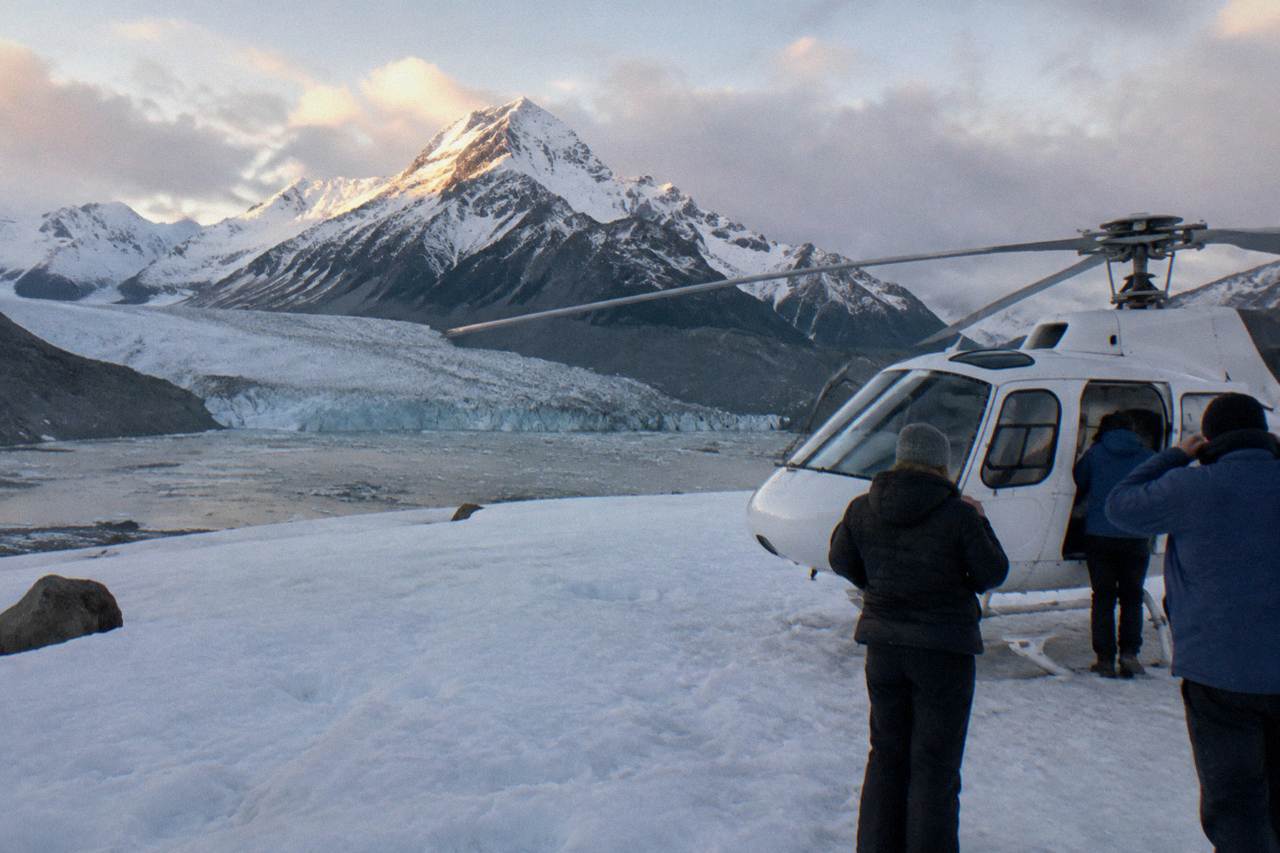
A glacier landing at Mount Cook puts you standing on ice at roughly 2,200 metres, a long way above the airfield where the day started. The question that fills packing lists is the practical one: how cold is it up there, and what does a body actually need? The honest answer sits between two extremes. It is colder than the valley, the snow glare is fierce, and the wind can add a bite, but the stop is short, measured in minutes rather than hours, and ordinary layered clothing handles it.
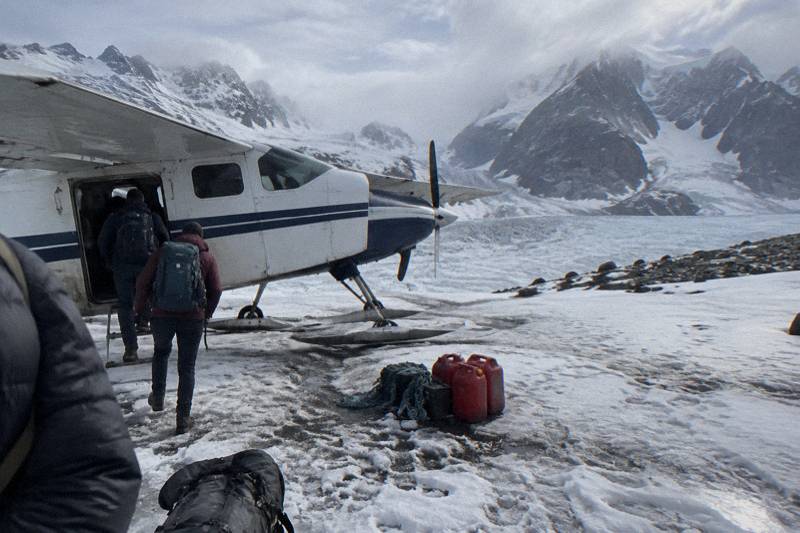
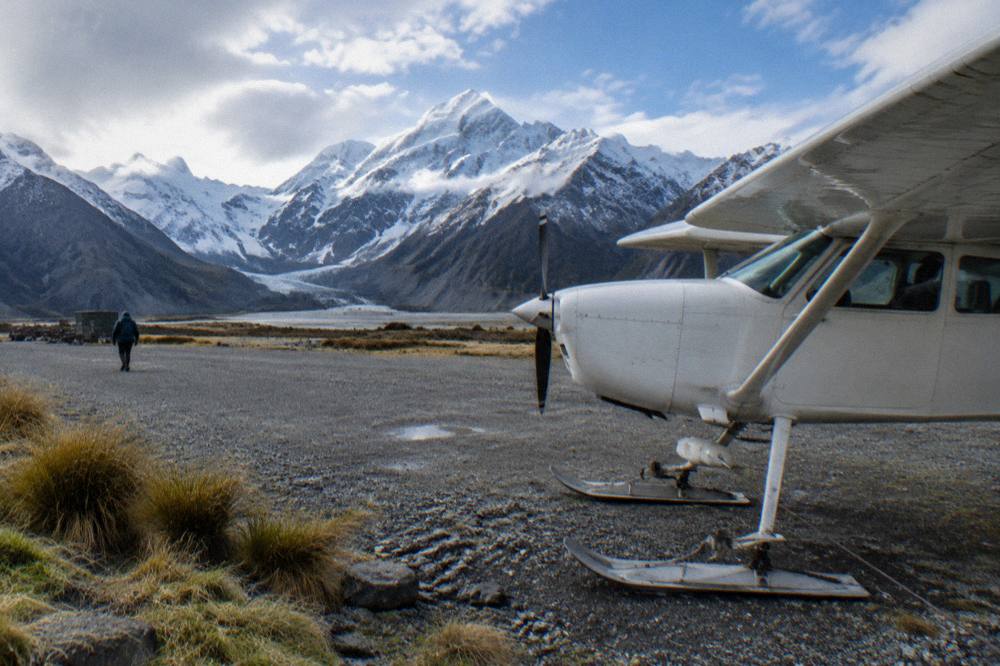
Expect a landing site typically 1 to 3 degrees cooler than the airport you depart from, with strong glare off the snow and possible wind chill on top, for a stop that generally runs 10 to 15 minutes where an operator states a time. Mount Cook Ski Planes and Helicopters gives both figures for its own flights. The cold is real but brief, and layers you can zip and unzip solve most of it.
That 1 to 3 degree gap surprises people who assumed the difference would be dramatic. The reason it is not comes down to how close the landing sites sit to the departure airfields. Mount Cook Airport sits on State Highway 80 just before Aoraki / Mount Cook village, already inside the mountains, and the Tasman Glacier landing zones used by the flight operators sit above the same valley system. The aircraft climbs, the air thins, the temperature drops a little, and then the doors open onto snow.
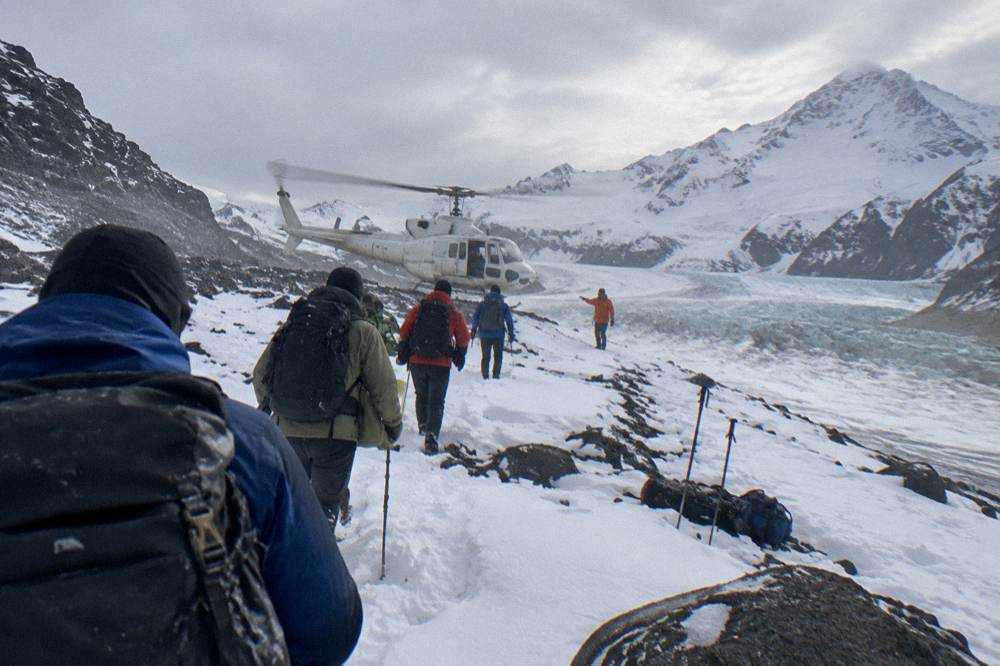
What the thermometer does not capture is the glare and the wind. Fresh snow at altitude reflects sunlight hard, and operators are blunt about it: sunglasses are not optional. Mount Cook Ski Planes and Helicopters tells guests to wear warm layers, sunglasses because snow glare is strong, and sturdy closed-toe shoes, and it bans drones and selfie sticks on its flights. The Helicopter Line gives similar advice for its own departures: a warm jacket, sturdy shoes, sunglasses, a camera on a strap, and it asks guests to leave loose scarves and bags behind, anything that could become a hazard near a running rotor.
The other number worth knowing is altitude context. Landing flights on the Tasman reach about 2,200 metres according to operator route descriptions, which puts the snowfield in genuinely alpine air even when the valley below feels mild. Aoraki / Mount Cook itself stands 3,724 metres, the tallest peak in New Zealand, and the Tasman Glacier below its east face is the country's largest and longest at about 23 kilometres, facts the Department of Conservation sets out on its Aoraki / Mount Cook National Park pages. You are not at the summit, but you are far enough up that the usual rules of alpine weather apply: it can change quickly, and the pilot makes the calls.
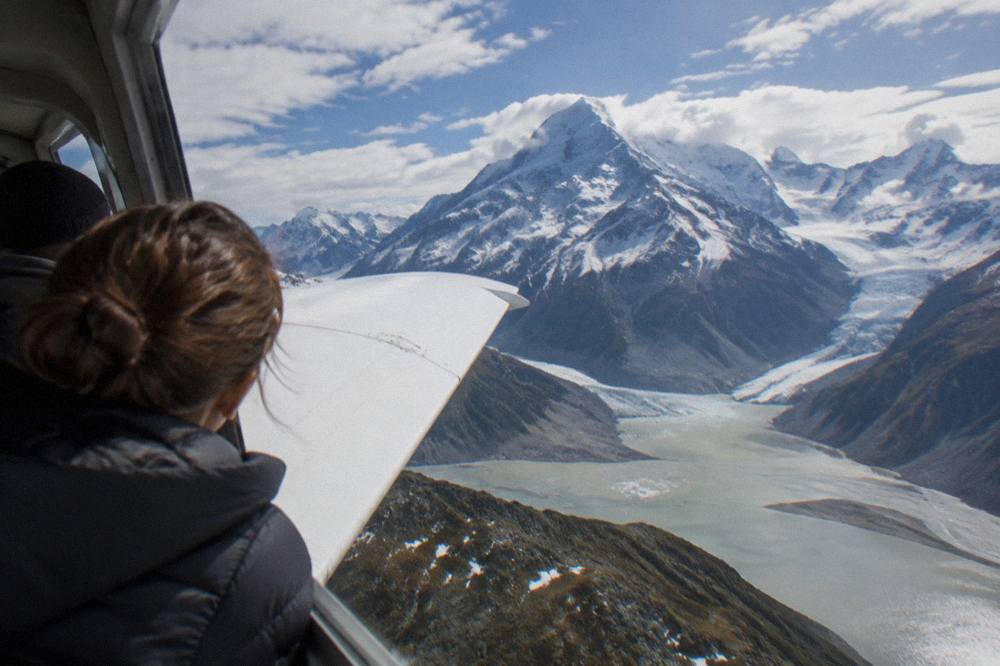
Time on the snow is the fact that keeps this manageable. Where an operator states a figure, it is short: 10 to 15 minutes is the general figure Mount Cook Ski Planes gives, and the individual flights that state snow minutes on their booking pages sit in the 5 to 15 minute band. Nobody is standing on the ice long enough to need expedition gear, and the aircraft, with its engine running and its heater working on the way up, is never more than a short walk away.
If a landing flight is on your shortlist, these three cover the spread of price and style:
The combo flight in that group is the cheapest glacier landing on this site at from $280 per person, rated 4.7 across 380 reviews, and it gets a fuller look later in this article. For a reader whose real question is what goes in the suitcase, the next section is the packing answer.
What Should You Wear For A Mount Cook Glacier Landing?
Wear warm layers you can shed, long trousers, sturdy closed-toe shoes with grip, sunglasses, and a warm jacket, plus sunscreen for the face. Operators at Mount Cook give this list directly: warm layers, sunglasses against snow glare, and solid footwear. Skip loose scarves, and leave the drone behind, they are prohibited on the flights and banned throughout the national park.
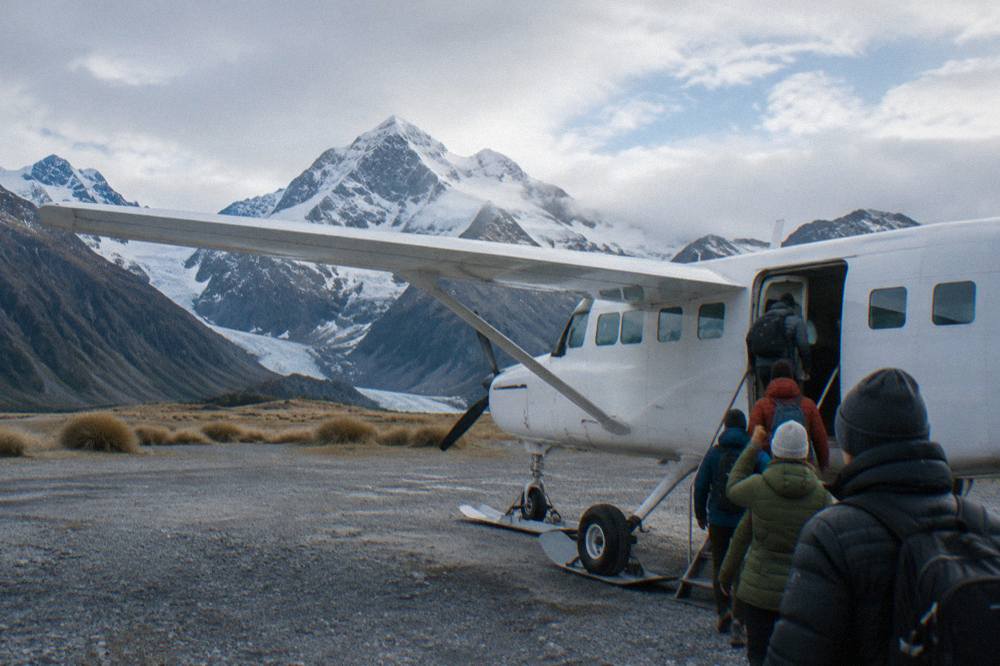
The layering advice comes straight from the operators, and it is worth taking literally. Mount Cook Ski Planes and Helicopters, which runs the ski plane and helicopter flights from Mount Cook Airport, recommends warm layers, sunglasses and sturdy closed-toe shoes, and notes that landing sites run 1 to 3 degrees cooler than the airport. The Helicopter Line, which departs from Glentanner Park about 15 minutes before the village, adds its own list: a warm jacket, sturdy shoes, sunglasses and a camera on a strap, with loose scarves and bags left behind. Both lists assume you will be standing on snow, in glare, in moving air, briefly.
| Item | Why it matters on the snow | Operator guidance |
|---|---|---|
| Warm layers | Trap heat, let you shed a layer in the aircraft | Warm layers recommended for landing flights |
| Sunglasses | Snow glare at altitude is strong and constant | Named by both operators as essential |
| Sturdy closed-toe shoes | Grip on snow and ice around the aircraft | Required footwear guidance |
| Warm jacket | Blocks wind during the standing time | Bring a warm jacket |
| Sunscreen on the face | Glare burns from below as well as above | Standard alpine advice |
| Leave behind: loose scarves, bags | Hazards near a running rotor | Asked to leave behind |
Footwear deserves a special note because it is the item people get wrong. Sneakers with smooth soles turn a snow landing into a sliding exercise. Hiking boots or any shoe with a real tread pattern are what the guidance points toward, and waterproofing helps because landing zones are snow, not dry pavement. High heels and sandals are simply not built for the surface, and the walk from the aircraft door to the photo spot can be over uneven, soft snow.
One clothing fact that surprises warm-weather visitors: sunglasses matter more than a heavy coat. The glare off a snowfield at 2,200 metres in a high-country summer is relentless, and it comes from below as well as above. A good pair of wraparound sunglasses plus sunscreen covers more misery per gram of luggage than anything else on the list.
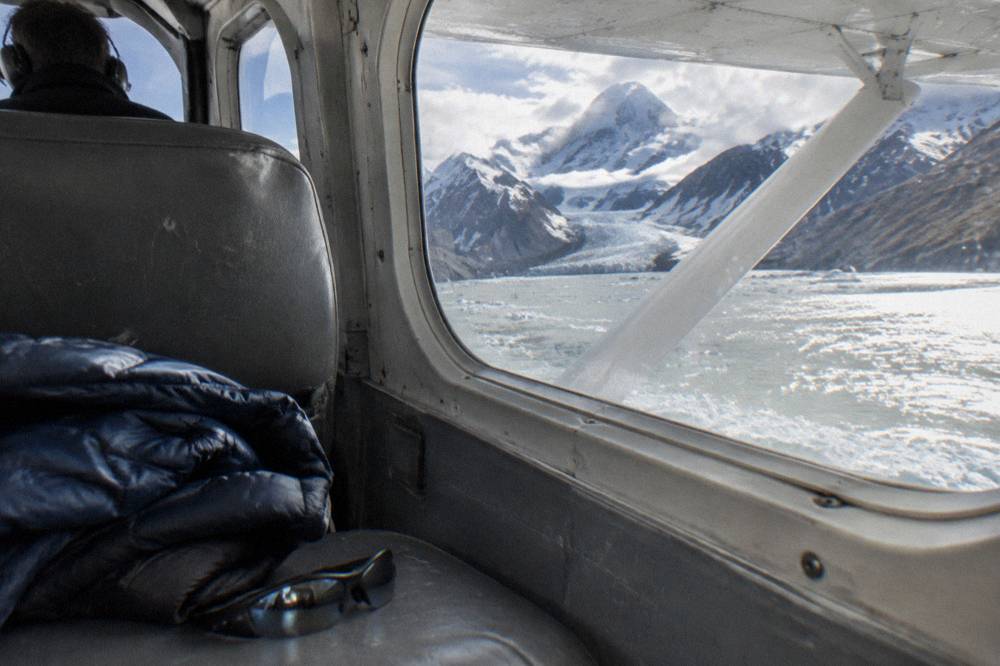
Planning the outfit is one thing, but a reader with a flight already in mind may also want to lock in a date while thinking about layers. All 34 booking pages state free cancellation up to 24 hours before the start for a full refund, so booking ahead for the first day of a stay, which is what operators themselves recommend for weather flexibility, carries little risk.
With the packing settled, the next practical question is how long the cold actually lasts.
How Long Do You Stand On The Snow At Mount Cook?
Where an operator states a figure, time on the snow runs 5 to 15 minutes, with 10 to 15 minutes the general figure Mount Cook Ski Planes gives for its landing flights. The standing time is deliberately short, because the aircraft keeps its schedule and the weather window can close, so the cold is a brief exposure rather than a sustained one, followed by a heated cabin ride back down.
Each flight that states snow minutes on its booking page shows the same pattern. The 45-Minute Glacier Highlights Helicopter Tour from Mount Cook and its ski plane stablemate both list 10 to 15 minutes on snow. The Mountains High 40-Minute Helicopter Flight lists 5 to 10. The Alpine Explorer lists 10. The Fox Glacier snow landing flights from The Helicopter Line list 10, and the Franz Josef Mountain Scenic Spectacular lists 5 to 10. The combo flight, for instance, gives a 45-minute total duration without breaking out the snow stop; where no figure is given, check with the operator rather than assuming one.
| Flight | Landing | Stated time on snow | Total duration | From (per person) |
|---|---|---|---|---|
| 45-Minute Glacier Highlights Helicopter Tour | Glacier landing | 10-15 min | 45 min | $401.73 |
| 45-Minute Glacier Highlights Ski Plane Tour | Glacier landing | 10-15 min | 45 min | $401.73 |
| Mountains High 40-Minute Helicopter Flight | Glacier landing | 5-10 min | 40 min | $409.68 |
| Mount Cook Alpine Explorer | Alpine landing | 10 min | 35 min | $350.73 |
| Fox Glacier and Mount Cook with Snow Landing | Snow landing | 10 min | 35 min | $291.78 |
| Franz Josef Mountain Scenic Spectacular | Snow landing | 5-10 min | 40 min | $409.68 |
The brevity is not an accident or a corner cut. A helicopter or ski plane on a snow landing is running a tight rotation: approach, shut down or idle, unload, reload, depart. Wind and cloud at altitude decide how long any stop is safe, and pilots keep the standing time within the window they are given. That is also why a landing is never promised on any flight here. Glacier Helicopters says plainly in its own guidance that it tries for a landing and tells guests at check-in if one may not happen, and The Helicopter Line and Glacier Helicopters set out their risk terms separately, so the cold question only fully applies once the aircraft is actually on the snow.
For readers weighing whether a short stop justifies the price, it helps to compare against walking options. The glacier landing versus flyover comparison breaks down what the landing adds, and the piece on whether a glacier flight beats walking to the Tasman viewpoint covers the ground alternative. The short version: the walk reaches a lake viewpoint, while the flight puts boots on ice no track can reach.
Is A Glacier Landing Colder Than An Alpine Landing At Mount Cook?
A glacier landing and an alpine landing sit at similar temperatures, and Mount Cook Ski Planes and Helicopters, which runs both, puts each a degree or three below the departure airfield, but a glacier landing puts you on snow and ice, with snow conditions varying by season, while an alpine landing site may be bare rock or snowpatch in summer, so the surface underfoot and the glare differ more than the air temperature. The distinction is about terrain, not degrees.
This distinction matters because Mount Cook flights come in three landing flavours. A glacier landing puts the aircraft on a glacier, in practice the Tasman for flights from the Mount Cook side. A snow landing, the term used for several West Coast flights, lands on snow without naming a glacier. An alpine landing touches down on a mountain site that is not a glacier. The cheapest per-person flight on this site, the Scenic Helicopter Flight with Alpine Landing at from $196, rated 4.8 across 536 reviews, is an alpine landing, not a glacier landing, and it passes by the Tasman rather than landing on it. The blog piece on whether an alpine landing is the same as a glacier landing unpacks the difference in full.
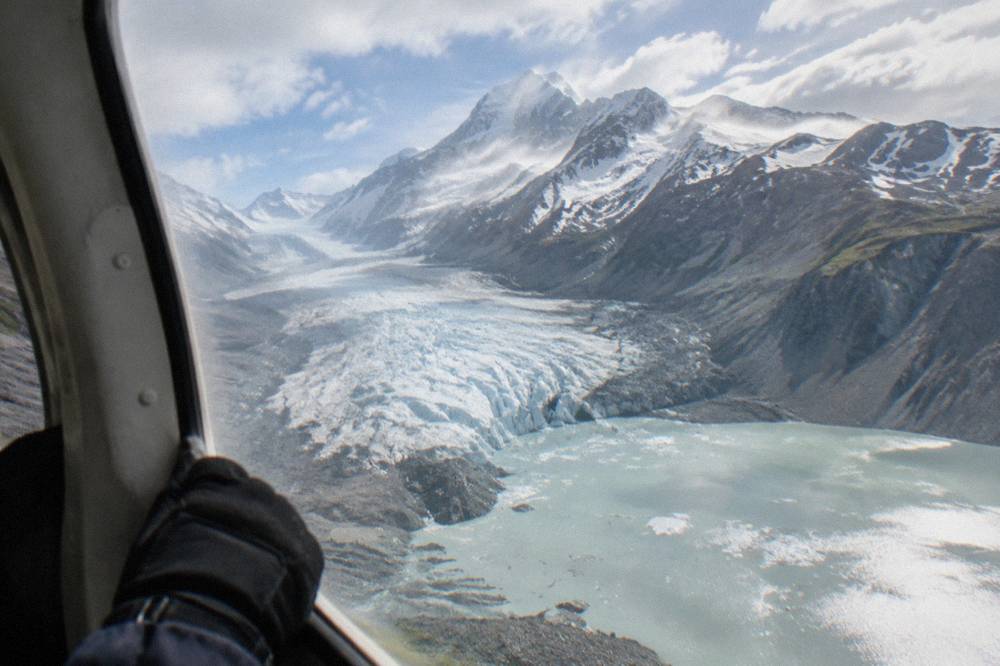
Mount Cook Ski Planes adds a seasonal nuance worth knowing for summer travellers: its alpine landing on Brass Peak or Liebig Dome may be snow-free in the heat of summer, roughly December to March, while its snow landings on the Tasman remain possible through the year, in the operator's own words. So a midsummer alpine landing can actually feel milder underfoot than a glacier landing on the same day, because you may be standing on rock rather than ice, and the glare drops away with the snow cover. More of these guides are collected on Mount Cook Glacier Flight.
The cheapest listing with a named glacier landing is the Ski Plane and Helicopter Glacier Combo Flight, from $280 per person, rated 4.7 across 380 reviews across its 45 minutes. It combines both aircraft types in one experience, a ski plane leg and a helicopter leg, with a glacier landing on the Tasman, and it departs from Mount Cook Airport on State Highway 80. For a reader deciding which cold to book, it is the value entry point to the on-ice experience; check dates for the combo flight alongside the wider Tasman Glacier landing options.
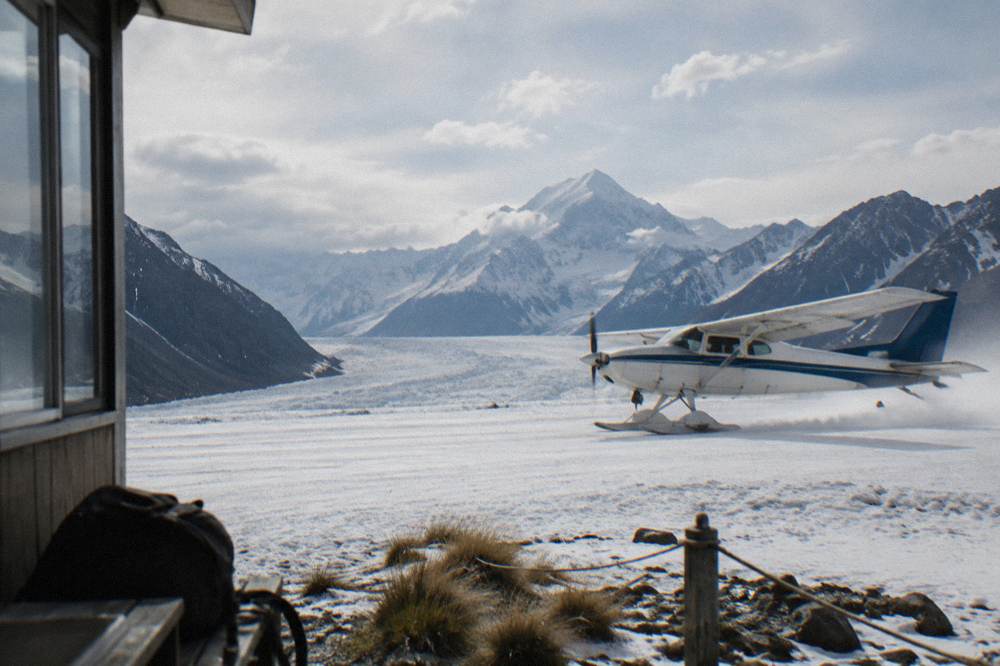
Whichever landing type you choose, the same packing list applies. The glacier version simply makes the sunglasses and the grip on your shoes non-negotiable, because the surface will be snow regardless of the month.
Does The Heli Hike Need More Layers Than A Flight?
Yes, comfortably more. A scenic landing flight keeps you on the snow for minutes, while the heli hikes spend up to two hours on the glacier, so operators ask for three to four warm upper layers plus proper boots for the hike, on top of everything a landing flight requires. The two 3-hour Tasman heli hikes from Mount Cook, each from $558 per person, are the products where layering stops being advice and becomes equipment.
The contrast is stark. The 3-Hour Tasman Glacier Helicopter Ride and Hike, rated 4.9 across 347 reviews, includes 15 minutes of helicopter time each way and up to two hours walking on the glacier with a guide. The 3-Hour Heli Hike run by The Helicopter Line, rated 4.8 across 270 reviews, follows a similar shape. Two hours on ice is a different thermal problem from twelve minutes: body heat drains, wind finds every gap, and a sweaty climb followed by a stationary photo stop can chill a person fast. Hence three to four upper layers rather than two, and boots with real ankle support rather than sturdy shoes.
The heli hikes also carry the only stated minimum age among the flights here: 10 years on The Helicopter Line's hike. That detail points at the physical reality of the longer format, and it is also the only product in this family with hotel pickup stated in Mount Cook Village. For anyone whose question is really "how cold is too cold for the family", the scenic landing flights, with their minutes-long stops, are the gentler introduction, and the hike can wait for a warmer day in a child's memory of what snow felt like.
One honest caveat on both formats: the weather decision can come late. Mount Cook Ski Planes notes the call can arrive anywhere from early morning to about 10 minutes before departure, which is exactly why operators suggest booking the first day of a stay, leaving room to rebook. NIWA's seasonal outlook for November 2026 to January 2027 favours above-normal rainfall in the Southern Alps, published by NIWA's climate team, which is a reason for schedule slack rather than a reason to stay home.
For most readers, though, the flight-plus-landing format is the realistic choice, and the cold it involves is a 15-minute experience, not a two-hour one.
What About Wind And Snow Glare At Mount Cook?
Wind chill and glare, not the thermometer, are what people remember. The standing time on the snow usually comes with moving air, and glare off the snowfield is strong enough that operators name sunglasses before they name jackets; landing sites also sit 1 to 3 degrees cooler than the airport, and alpine weather can change quickly, so the felt cold on any given day varies more than the listed temperatures suggest.
Wind is the multiplier that no temperature figure captures. A still day at minus one feels milder than a windy day at plus four, and the landing zones sit in open snowfields where the katabatic drainage off the glacier can add a steady breeze even under a blue sky. This is where the layering advice earns its keep: a windproof outer layer over two insulating layers beats one thick coat, because the outer layer does the blocking while the inner ones hold the warmth still. A beanie and gloves weigh almost nothing and both earn their place in a day pack; nobody has ever regretted gloves on a snowfield.
Glare deserves equal respect. UV intensity climbs with altitude, and fresh snow reflects most of what reaches it, so light arrives from above and below at once. Wraparound sunglasses or glacier glasses are the right call, and sunscreen on the face, including under the chin and nose, prevents the odd burn patterns snowfields are known for. The operators' guidance on this is uniform and unglamorous, and it works.
The longer context for the snow you land on is worth a sentence. NIWA's annual end-of-summer snowline survey, flown in a light aircraft every year since 1977, reported in March 2026 that retained snow on some glaciers was "only a stay of execution and not a reversal in the long-term decline of ice coverage". The Tasman still holds ice around 600 metres deep near the Hochstetter Icefall, but the snow you stand on is part of a shrinking system, one more reason the experience carries the weight it does.
A note on timing the day: New Zealand daylight saving began on 27 September 2026 and runs into early April 2027, which shifts morning departure light later through summer. Operators fly when the weather allows rather than to a golden hour, and no time of day guarantees clear air, so book the first available slot of a stay and let the operator rebook if the mountains say no.
Common Questions About Mount Cook Glacier Landing Cold
How Cold Is It On A Mount Cook Glacier Landing Flight?
Landing sites are typically 1 to 3 degrees cooler than the departure airport, per Mount Cook Ski Planes and Helicopters, with strong snow glare and possible wind on top. The exposure is short: 10 to 15 minutes on the snow is that operator's general figure. Warm layers, sunglasses and sturdy closed-toe shoes cover it.
How Long Do You Stand On The Snow At Mount Cook?
Where a flight states a figure, the standing time runs 5 to 15 minutes. Mount Cook Ski Planes gives 10 to 15 minutes as its general figure; individual flights that state snow minutes on their booking pages sit between 5 and 15. Check the booking page for any stated figure.
What Should You Wear For A Glacier Landing?
Warm layers you can shed, long trousers, sturdy closed-toe shoes, sunglasses and a warm jacket, plus sunscreen. Operators also ask that loose scarves and bags be left behind, and drones are prohibited both on the flights and throughout the national park.
Is An Alpine Landing Colder Than A Glacier Landing?
The air temperature is similar, a degree or three below the airfield. The difference is the surface: Mount Cook Ski Planes and Helicopters describes snow landings on the Tasman, and landing sites and snow conditions vary by season. An alpine landing is a different thing from a glacier landing, and its site can be snow-free in summer, so ask the operator what to expect.
Does The Heli Hike Need More Clothing Than A Landing Flight?
Yes. The 3-hour Tasman heli hikes spend up to two hours on the glacier versus minutes on a scenic landing, so operators call for three to four warm upper layers and proper boots rather than just a jacket and sturdy shoes.
Can A Landing Be Cancelled Because It Is Too Cold Or Cloudy?
A landing is never promised: weather and the pilot decide on the day, and each operator sets its own weather and refund terms. This is why operators suggest booking the first day of a stay. Separately, all 34 booking pages state free cancellation up to 24 hours before the start for a full refund.